

























































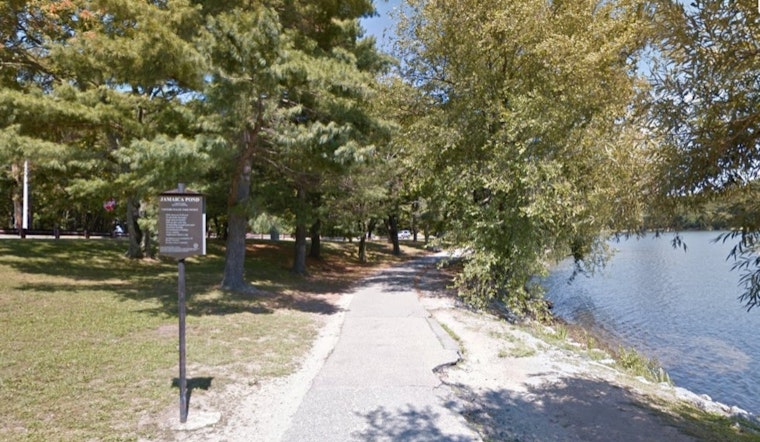
According to a health advisory from the Boston Public Health Commission (BPHC), Jamaica Pond in Boston was closed to water activities earlier this week, due to a presumed bloom of cyanobacteria, also known as blue-green algae. The notorious health risks posed by these harmful algae blooms, which can sicken both people and pets if ingested, have prompted authorities to advise visitors to evade contact with the water and any visible algae concentration.
This form of bacteria cause water to become murkier, often resulting in it appearing similar to 'pea soup' or paint. The produced toxins potentially cause skin, eye irritation and even respiratory issues upon contact. Ingesting can result in acute gastrointestinal conditions. The impact becomes more severe, particularly for small pets, when these toxins are present.
The primary health concern in humans is from swallowing water containing blue-green algae, while direct contact or inhalation are less likely but still harmful. For dogs, water ingestion or skin contact with tangled up algae or scum is the main cause of concern. The toxins, based on their specific types, can disrupt normal liver, kidney and neurological functioning. In extreme cases, this can be fatal. People are advised to immediately rinse any affected area on themselves, their kids, or pets if they come into contact with the pond's water or algae bloom.
The BPHC will be cooperating with the Massachusetts Department of Public Health (DPH) in the coming weeks to determine if and when the advisory will be withdrawn. In order to lift the recreational water advisory, the DPH requires two consecutive weekly samples of algal cell counts beneath the safe limit of 70,000 cells/milliliters of water.
As per public health officials, homeowners and park attendees should remain vigilant for the slightest signs of algae bloom and report as soon as possible. To prevent these blooms, the U.S. Environmental Protection Agency (EPA) outlines the maintenance of a healthy water balance in ponds and lakes by limiting nutrient inputs and amplifying circulation. Developing and implementing these solutions, as well as working with communities, is key to ensure the safety of both individuals and the environment.



