

























































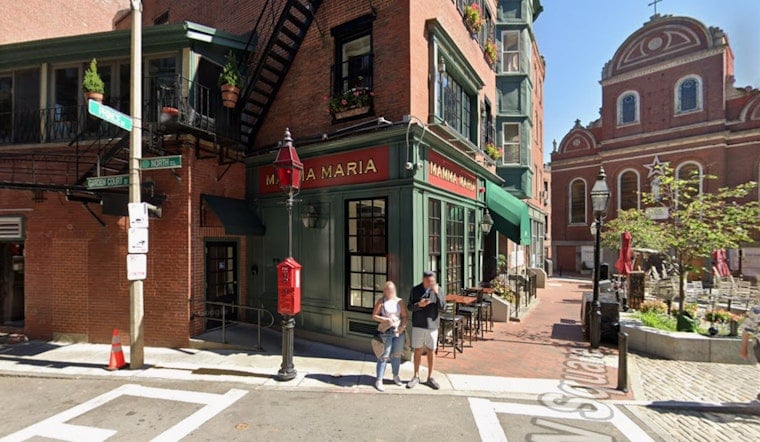
Boston diners booking a table this summer might not notice which app they used to snag it, but restaurants across the city are increasingly picking sides in a fight that has little to do with seating charts. Mamma Maria in the North End, O Ya downtown, and the Seaport's Maple & Ash have all landed on different platforms in a scramble that pits tech and financial giants against a decades-old incumbent, with restaurant operators wrestling over who ultimately owns the data generated by a guest's reservation.
The fight has been reshaped by a wave of corporate deals. DoorDash bought SevenRooms for $1.2 billion in 2025, folding the guest-management platform into its broader commerce operation, according to The Boston Globe. SevenRooms, founded in New York in 2011, has operated in the Boston market since 2018, and its parent company reports that new restaurants are signing on every week, according to DoorDash executive Parisa Sadrzadeh, as cited in that reporting. Mamma Maria, O Ya, and the Coje Restaurant Group are among the local operators now running on the platform.
American Express, meanwhile, purchased Tock for $400 million in 2024, pairing it with Resy, which the company already owned. Resy now counts 25,000 restaurants in its network, per the platform's own figures, and it charges restaurants a flat membership fee rather than the per-head charge that has long defined its rival OpenTable. O Ya uses Tock, which allows diners to prepay for their meals, while chef Jennifer Matarazzo has signed with Resy.
OpenTable Digs In Against a Shrinking Share
OpenTable, launched in 1998 and now owned by Booking Holdings following a $2.6 billion acquisition in 2014, remains the largest global online reservation platform, with roughly 65,000 restaurants on its books worldwide, according to the company's own reporting cited by the Globe. But its grip on the U.S. market has slipped in recent years as newer, operator-friendly rivals have gained ground; industry research tracked by CheckThat.ai found OpenTable's share of U.S. restaurant reservations fell from 51% to about 31.9% by early 2025.
That pressure shows up directly in restaurant bookkeeping. Jared Sadoian has estimated that OpenTable's discovery fees run between $1 and $1.50 per booking, a cost structure that stands in contrast to the flat subscription pricing competitors favor. Sadoian has also said that SevenRooms, Resy, and Tock have each dangled incentives to lure restaurants away from OpenTable. In April, OpenTable began requiring subscribers to agree that it is their primary reservation platform, and the company courted the Nautilus Restaurant Group in 2024 with what it described as an affordable, all-inclusive arrangement — though Nautilus ultimately opted to use Resy and Tock instead.
What Each Platform Actually Does With Guest Information
The tools themselves increasingly double as data engines built for restaurants, not diners. SevenRooms functions as a customer relationship management system, offering detailed diner tagging, personalized guest profiles that can follow a customer across multiple locations of the same restaurant group, plus email automation and online reputation monitoring. In June, the company launched Channel Connect, a feature that consolidates booking data pulled in from other reservation sites directly into the SevenRooms system.
Resy has built a similar bridge into the point of service. The platform has partnered with Toast, the Boston-based restaurant technology company, connecting guestbook information directly to Toast's systems so staff can see a diner's history in real time. OpenTable, for its part, says it does not disclose individual diner data to its credit-card partners, and the company instead relies on aggregated, anonymized insights to measure how well its loyalty programs are performing. It has also rolled out an AI-powered tool for configuring dining room layouts.
Restaurants Weigh Convenience Against Control
Not every operator is sold on the tech arms race. Chef Michael Leviton has said artificial intelligence cannot replace human connection in a dining room, and he personally prefers making restaurant reservations the old-fashioned way — by phone. Pajo Bruich has argued that the platforms courting restaurants are, above all else, seeking diner data, a view that cuts to the heart of what operators are actually being asked to trade away in exchange for booking software.
That trade-off is landing amid growing public unease about where personal data ends up. A 2024 survey by Fishbowl found that 74% of restaurant diners worry about the security of the personal information they share with dining establishments, even as 73% said they feel more loyal to businesses that are transparent about how that data gets used. Massachusetts lawmakers have been moving on the issue too: the state's House and Senate advanced the Massachusetts Consumer Data Privacy Act in mid-2026, a bill that would let residents access, delete, or opt out of having their personal data sold or used for targeted profiling, according to the ACLU of Massachusetts. Competing House and Senate versions of the measure were sent to a conference committee in June to hash out final consumer protections.
The stakes for restaurants are considerable given how much of the city's dining scene is in play. Suffolk County, which includes Boston, is home to roughly 2,375 food and beverage establishments, part of more than 18,700 statewide, according to geospatial data compiled by xMap. Nationally, the money moving through full-service dining has only grown: inflation-adjusted consumer spending at full-service restaurants hit $488.4 billion in 2025, up 66% since 1997, according to the U.S. Department of Agriculture Economic Research Service. With that much revenue on the table, it's little wonder that owning the guest — not just the reservation — has become the real prize.





