

























































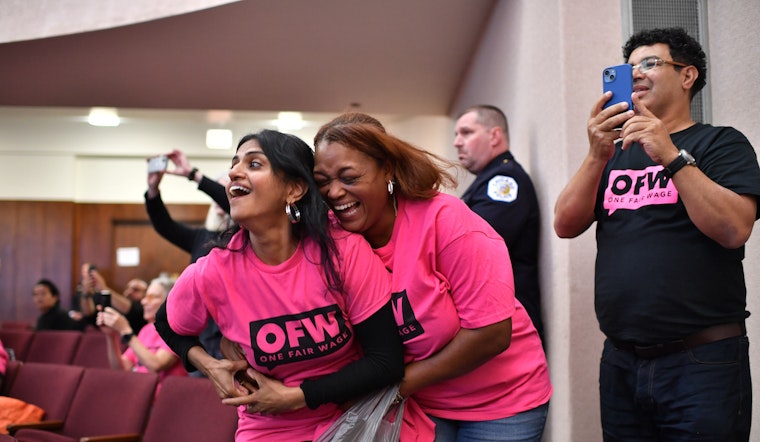
Today, Chicago became the largest US city to mandate full minimum wage for tipped employees. The City Council approved the progressive plan of Mayor Brandon Johnson with a 36-10 vote. Despite concerns over prices and potential staff reductions, the decision symbolizes a victory for the least compensated service workers, according to the Chicago Tribune.
Today, we passed the One Fair Wage ordinance, raising the subminimum wage for restaurant and hospitality workers. This is the culmination of years of advocacy, and a win for Black and Brown women, and workers across our great city.
— Mayor Brandon Johnson (@ChicagosMayor) October 6, 2023
Thank you to all who fought to make history. pic.twitter.com/uog8SDuaHl
Under the new ordinance, the disparity between tipped and minimum wages will be progressively lessened, moving from 60% to 40% in July next year. Annual reductions of 8% will eventually lead to wage equality by July 1, 2028. Seven states, including California, have already eliminated tipped wages. However, as California prohibits such wages at the state level, Chicago is the first city to implement these changes on its own, reports the Chicago Tribune.
Ahead of the vote, several progressive council members voiced their support for the law. Alderman Rossana Rodriguez Sanchez, 33rd, noted past shortcomings, recalling the minimum wage increase under former Mayor Lori Lightfoot that failed to include tipped workers. At long last, these workers will see change, reinforcing the council's stance on income inequality and worker rights.
However, there is also concern, particularly among small businesses, about the potential impact on local economies. Alderman Nicole Lee, 11th, voiced these uncertainties, but Alderman Carlos Ramirez-Rosa, 35th, argued these concerns by stating evidence that shows businesses can indeed thrive under these conditions (Chicago Tribune) by citing research done in cities like Los Angeles and Minneapolis.
A clerical error once delayed the vote, but the One Fair Wage ordinance, a crowning achievement for progressive policy, is now in effect. The new minimum wage for tipped employees will be $15.80, equivalent to Chicago's existing minimum wage, phasing out the tipped wage system over the next five years, as per Block Club Chicago.
Not to be understated, this transformation aims to commensurate longstanding income disparities, particularly amongst Black and Latina women. It signifies a step towards equality, with hopes that other cities and states will follow. Built on years of solidarity and advocacy, it is poised to enhance the lives of many service workers in Chicago.





