

























































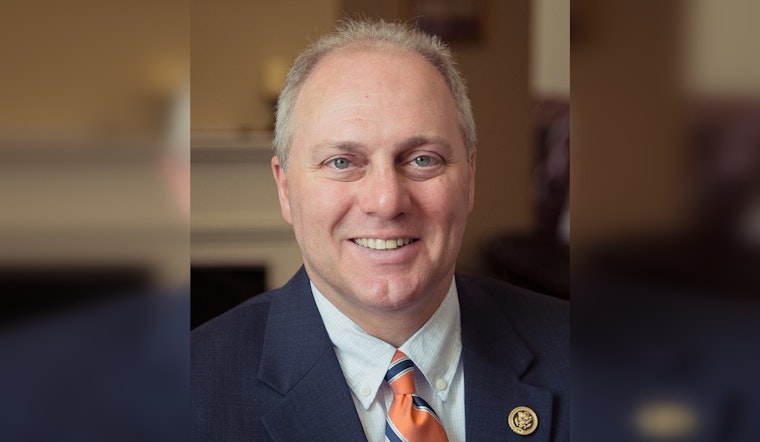
Today, the political arena witnessed a surprising turn of events as Republican Steve Scalise's aspiration to become House Speaker ended prematurely. Scalise's abrupt cessation of his speaker campaign leaves an unexpected vacancy, according to the Chicago Tribune.
Scalise's decision to withdraw his bid triggered surprise, revealed initially in a closed-door GOP meeting. The uphill battle in amassing necessary votes and the temporary closing of the House are underlying factors. Despite his consistent outreach to potential supporters, Scalise couldn't rally the Republican majority, according to CBS News.
Nevertheless, hope prevails as Rep. Jim Jordan, also a former contender, backed down from his campaign for the position, endorsing Scalise. However, certain hard-liners, allegedly motivated by former President Donald Trump, resist backing Scalise, advocating concern over his health amid his cancer battle. The Chicago Tribune provides this information.
With the House lacking a speaker for two weeks and an imminent federal shutdown, the power imbalance is palpable. The absence of a unified Republican majority increases the pressures on future House operations. The possibility to overcome such deep-seated partisan politics remains uncertain.
In another Chicago Tribune article, unity, forgoing personal biases, and national interest are underscored as requirements leading to a solution. Scalise and Democratic Rep. Hakeem Jeffries reflect these sentiments, the latter urging an end to intra-party conflict within the GOP.
Previously, former House Speaker Kevin McCarthy faced similar opposition from the far-right faction within his party. Nonetheless, the unique circumstances and subsequent stakes in the current scenario are unprecedented. The associated issues with the role lie not only in the potential candidate's ability to unite the different factions within the Republican party, but also in securing firm endorsements from hard-line holdouts.





