

























































The estimated completion costs for VTA's BART to Silicon Valley, a major transportation project in the Bay Area, are now $12.2 billion, an increase from $9.3 billion, per VTA's official blog. This increase, attributed to rapid inflation, construction material costs, and labor costs, is mitigated by the VTA's fiscal strength, allowing the project to proceed.
VTA General Manager, Carolyn Gonot, said, "Extreme inflationary costs are unfortunately affecting all major U.S. infrastructure projects, but VTA and other funding sources are financially sound and able to absorb the increase."
State, regional, and local funding sources aid the project, including the Transit and Intercity Rail Capital Program, Regional Measure 3, 2000 Measure A, and 2016 Measure B. VTA also hopes to secure a grant from the Federal Transit Administration New Starts Program.
Challenging market conditions including rising material prices, labor shortages, and increased interest rates escalated across infrastructure sectors, creating a "new normal," as stated by Peter Rogoff, former USDOT Under Secretary, Federal Transit Administrator, and transit CEO, in a VTA Board of Directors meeting presentation.
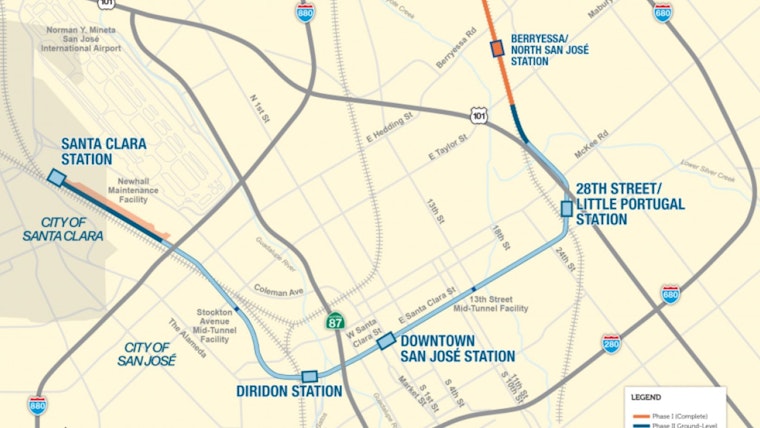
In contrast to these nationwide trends, the BART extension's first phase ran $100 million under budget, completed in June 2020. The last stage will stretch an additional six miles, adding four more stations between downtown San Jose and Santa Clara.
However, the project's estimated completion date has been shifted from 2033 to 2036 in consideration of updated engineering, and risk assessments. The new cost, schedule forecast, and financial plan will be briefed to the VTA Board of Directors at a Board Workshop on October 20th.
While project costs remain to increase, anticipated local sales tax revenues from 2000 Measure A and 2016 Measure B are also expected to rise. The operation and maintenance element of the project receives a boost from increased 2008 Measure B tax estimates. Gonot affirmed VTA's commitment to responsible stewardship of public funds amidst inflation pressures and interest rate increases.
The funding to extend BART to Silicon Valley won't divert from other VTA projects, as ensured by VTA's 10-year balanced budget projection. This plan helps the agency ensure its ability to manage the pressures of inflation while continuing to provide high-quality public transport services.
Once completed in 2036, the VTA's BART to Silicon Valley is anticipated to be one of the largest and most significant transportation projects in the United States. It will cater to increasing population growth, combat traffic congestion, decrease climate impacts, provide equitable transportation, and foster transit-oriented development, including housing development. It also furthers the vision of enveloping the Bay Area with rail transit.
The average daily ridership of the four new BART stations—28th Street/Little Portugal, Downtown San José, Diridon, and Santa Clara—is projected to be about 54,000 by 2040. This accounts for 6.9 percent of the total expected BART ridership. The Downtown San Jose station is anticipated to serve approximately 27,900 individuals daily. The extension was identified as the top priority for improving regional mobility in the Metropolitan Transportation Commission Plan Bay Area 2040 long-range plan.



