

























































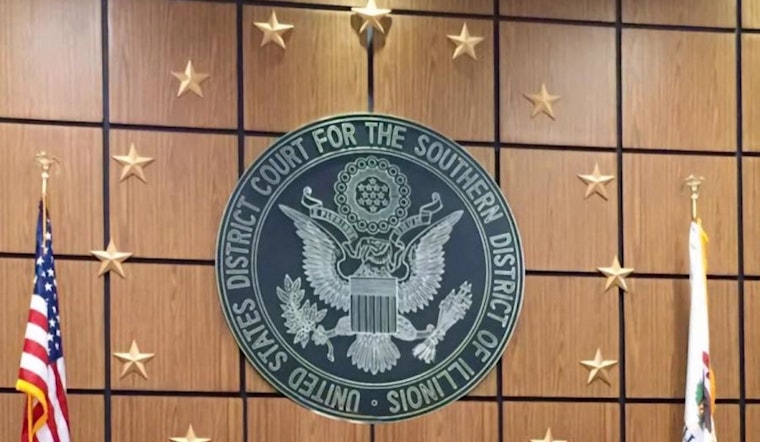
Last Thursday, drug trafficker Mario L. Delgado-Lopez was sentenced to 13 years in federal prison according to the United States Department of Justice. Having evaded federal law enforcement for four years, his capture questions the resilience of U.S. drug trafficking networks and law enforcement effectiveness against them.
Delgado-Lopez, from Puerto Rico, pleaded guilty in 2018 to conspiracy to distribute controlled substances as well as intent to distribute both heroin and fentanyl. Court documents reveal his co-conspired distribution of more than 850 grams of fentanyl and over 550 grams of heroin in Madison and St. Clair counties in Illinois. He was on the run after missing his initial sentencing hearing in May 2019 and was finally captured in Mexico in June.
The U.S. Attorney, Rachelle A. Crowe, expressed during the sentencing that Delgado-Lopez's crimes had far-reaching effects on southern Illinois and impacted many families. However, the sentence was indicative of the progress law enforcement agencies like the Drug Enforcement Administration (DEA), the U.S. Marshals Service, and local police departments are gradually making in combating illicit drug networks.
Assistant Special Agent in Charge Joseph Dixon, the leading DEA investigator in southern Illinois, emphasized the cruciality of interagency cooperation in hunting down drug traffickers. Dixon stated that collaboration was critical to "hold those who peddle poison in our communities accountable" and to ensuring that these criminals are safely behind bars.





