

























































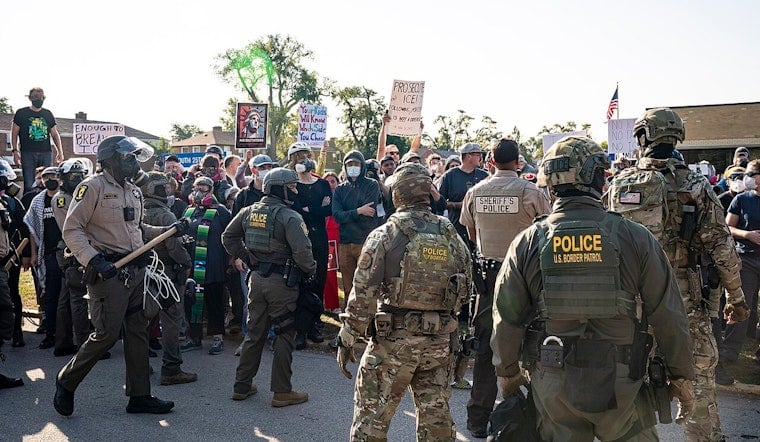
Nury Ortega has spent months navigating jails and detention facilities, not just to find her own partner, but to help hundreds of other Chicago families do the same. Since federal agents arrested Oscar Burciaga at a Chicago construction site on December 16, 2025, and later deported him, Ortega has fielded calls from as far away as Minnesota, Milwaukee and Texas from people desperate to learn whether their loved ones were still alive.
Burciaga was arrested alongside four co-workers that day, swept up in what federal officials called Operation Midway Blitz. As reported by the Chicago Tribune, Ortega searched for an attorney for Burciaga and his co-workers, raised money through fundraisers to support them, and helped them contact their families from detention. She ensured Burciaga received money, food and hygiene supplies while he was held, and helped his family create accounts so they could communicate with him directly.
Burciaga had been the primary breadwinner in their household, one of many families in similar arrangements according to the same account. Ortega has three children — Christopher, 20, Alexander, 17, and Elkin, 13 — and she has said her kids are sad and angry about their stepfather's deportation. She told the paper she does not know when she will see Burciaga again in person.
A Community Leader Long Before the Raids
Ortega's role as a Little Village advocate predates the immigration sweeps by years. Cook County honored her as an Unsung Heroine in March 2021 for founding organizations including Friends of Spry, which funds public school arts and sports programs and provides emergency aid to neighborhood families, according to Cook County.
That grassroots infrastructure meant Ortega was already positioned to help when the calls started coming in. Per the Tribune's reporting, she has now helped hundreds of families locate and communicate with detained relatives, telling desperate callers simply that their loved ones were alive. She said people keep calling because immigration enforcement is far from over.
Dance Interrupted, Prayers Silenced
Ortega leads the Atl-Ehecatl dance group, practicing an indigenous rite through dance on Monday nights in Little Village. She has said that federal agents forced her community to stop its prayers, and that she and other dancers could not meet or perform because they feared being targeted based on their appearance. On August 31, Ortega hugged 9-year-old Bianca Soto in Little Village, one of the U.S.-born children left behind after a parent's deportation or voluntary departure, per the same account.
The Numbers Behind the Sweeps
The scale of what families like Ortega's endured has since drawn scrutiny from journalists and state investigators alike. A December 2025 Chicago Tribune analysis of federal data found that despite Department of Homeland Security claims the operation targeted dangerous criminals, roughly 81 percent of those detained had no prior criminal convictions. A separate Tribune cost analysis put the price tag for the 64-day federal surge in the Chicago region at approximately $59 million.
In May, Chicago Tribune staff won the Pulitzer Prize for Local Reporting for their series documenting the operation's execution, community resistance and human toll, according to the Pulitzer Prizes. The following month, the state-established Illinois Accountability Commission published a 204-page final report concluding that federal agents committed widespread misconduct, used unwarranted physical force, denied due process and caused profound harm to families during the operation. The commission also submitted formal referral letters to Cook County prosecutors and municipal police departments requesting criminal reviews of agents who may have violated state laws or agency policies, according to Capitol News Illinois.
Why Little Village Was Especially Vulnerable
Little Village's demographics help explain why the neighborhood absorbed such a heavy blow. A 2020 study by the Pulitzer Center found that 34 percent of residents lacked health insurance, nearly a third lived below the poverty line, and an estimated 25 percent were undocumented immigrants. Losing a primary breadwinner to detention or deportation frequently pushes remaining partners and children into severe household poverty, according to research published by KFF.
The mental health toll on children left behind is also well documented. An October 2025 analysis by the University of Illinois College of Medicine emphasized that mass raids and parental deportations inflict severe trauma on children, leading to heightened rates of anxiety, depression and post-traumatic stress disorder.
Courts Keep Weighing In
Legal battles over how the operation was carried out remain unresolved. The U.S. Court of Appeals for the Seventh Circuit affirmed a federal court order in May extending the Castañon Nava Consent Decree, which restricts ICE and Border Patrol agents in the Chicago region from making warrantless arrests without probable cause, according to the ACLU of Illinois. Hoodline previously reported that a Chicago judge ruled Midway Blitz raids broke that decree, and separately covered the case of a Little Village man deported after DHS labeled him a gang member.
For Ortega, the legal and political fights continue in the background while the daily work stays personal — locating people, calming frightened relatives, and keeping a dance practice alive even when fear keeps dancers away. She still does not know when she will next see Burciaga in person.



.jpg)