

























































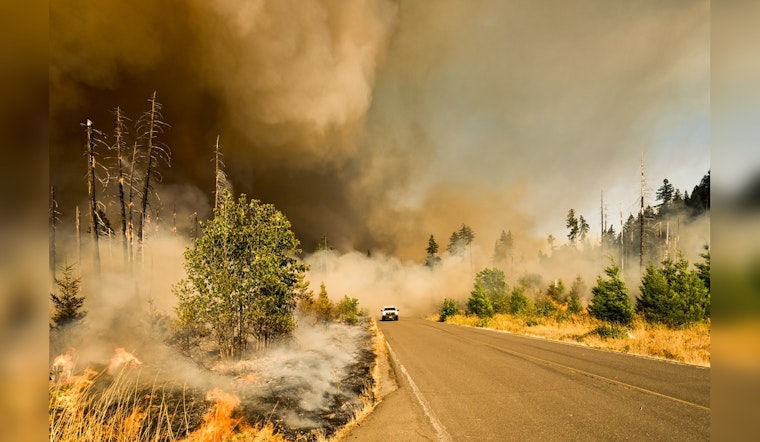
In the peak of summer, the Midwest suffered elevated pollution levels as a result of wildfires in Canada, prompting authorities to contemplate erasing these days from historical records, as documented by the Chicago Tribune. Invoking the 'exceptional events' exclusion—a provision for uncontrollable, non-human-caused pollution—could provoke enforced action from the U.S. Environmental Protection Agency (EPA), possibly stalling economic activities. This move could mark the largest historical exclusion under the federal Clean Air Act.
The role of climate change in intensifying wildfires and diminishing air quality, has become clearer, according to the New York Times. In 2023 alone, smoke from Canadian wildfires was a significant contributor to unprecedented pollution levels in the Midwest. Despite necessary strategies executed by people and governments, it's apparent that solutions for these 'exceptional' episodes must target the larger fight against climate change.
The Chicago Tribune notes that air quality agencies distinguished 65 wildfire instances as potential 'exceptional events' in 2020—a significant uptick from the 19 noted in 2016. The rise in approved 'exceptional events' since 2016 cover geographical zones inhabited by at least 21 million Americans according to combined findings from MuckRock, The Guardian, and The California Newsroom. This underscores the escalating impact of wildfires on air quality and resultant growing pressure on states to apply the 'exceptional events' exemption.
The 'exceptional events' exemption has also caused unease among environmental advocate groups. Brian Urbaszewski, Director of the Respiratory Health Association in Chicago, criticized the potential exemption application, arguing that, "Dismissing them as random and uncontrollable undermines the Clean Air Act objectives." Urbaszewski underscored the need for recognizing the escalating frequency of wildfires and their implications on pollution.
For the average individual, wildfire smoke impacts were visible in their daily lives as they experienced air hazards during this summer. A piece in The New York Times recalls how smoky skies stifled outdoor activities across the Midwest, prompting citizens to take shelter indoors. As officials prioritized public health, many activities and events was cancelled or postponed.
Notwithstanding the immediate inconvenience of cancelled events and imposed outdoor activity restrictions, pollutants such as ozone and particulate matter (PM2.5) are posing great risks. Chronic exposure presents significant health peril, particularly for those with respiratory conditions, placing added strain to our healthcare system. It is critical to proactively address all contributors, including wildfires, to air pollution to mitigate detrimental effects on public health and the environment.
While state authorities and the EPA are examining the feasibility of invoking the 'exceptional events' exemption for 2023, the final decision will rely on definitive data. It's imperative that our approach to pollution control not only mitigates symptoms but also focuses on contributing factors like climate change and its influence on wildfire frequency and intensity. By doing so, we can aim for solutions that decrease pollution while promoting sustainable growth.




