

























































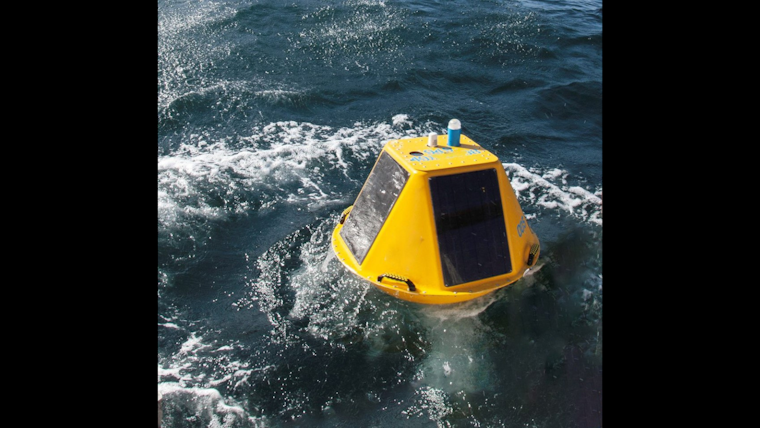
Today, the Port of San Diego announced the addition of HyperKelp Inc. to its Blue Economy Incubator (BEI), furthering its commitment to sustainable aquaculture and emerging blue tech. The decision highlights the port's commitment to sustainable maritime growth and reinforces its role as an environmental steward.
HyperKelp Inc. will undertake a two-year, $250,000 pilot project focused on their Kelp Smart Buoy, a cutting-edge technology designed to revolutionize ocean data collection and analysis. The technology aims to facilitate sustainable initiatives, including environmental protection, maritime emission reduction, and advancements in shellfish and seaweed aquaculture, per the Port of San Diego.
The inclusion of HyperKelp Inc. into the BEI, established in 2016, aligns with the Port's commitment to sustainable innovation. The program currently backs initiatives like ECOncrete's Coastalock technology, installed in March 2021 along Harbor Island, that replaces traditional shoreline protection with eco-friendly alternatives. The program also supports ecoSPEARS, utilizing its license for a green remediation solution developed by NASA to remove contaminants from marine sediment.
Furthermore, the BEI continuously invests in start-ups addressing sustainability-related areas. FREDsense Technologies, in 2021, transitioned to creating a portable, five-in-one sensor device to analyze metals in stormwater. San Diego Bay Aquaculture is developing a shellfish nursery system named FLUPSY, an effort to solve the coast-wide shellfish seed shortage by facilitating the growing of oysters before transportation to larger farms. San Diego-based aquaculture start-up Sunken Seaweed is testing the feasibility of seaweed farming in the Bay with its pilot project expanded in 2022. This initiative was featured in NBC Climate's Earth Week coverage in April 2023.
The CEO of HyperKelp, Graeme Rae, commended the Port for its commitment to resiliency in San Diego Bay and was recognized as the first large commercial port to recognize the potential of the Kelp Smart Buoy. CTO Costas Soler emphasized that the partnership with the Port would greatly leverage access to bay region environmental data, setting precedents for commercial ports across the globe.
The Port of San Diego, via the BEI, has ten early-stage companies to launch pilot projects and has allocated $2 million in funding. This has attracted further outside financial support and provides in-kind support, including access to port-owned properties and managing permits and installations. The BEI has received various accolades, recognition, and rewards at both state and federal levels and from industry experts and academia.




