

























































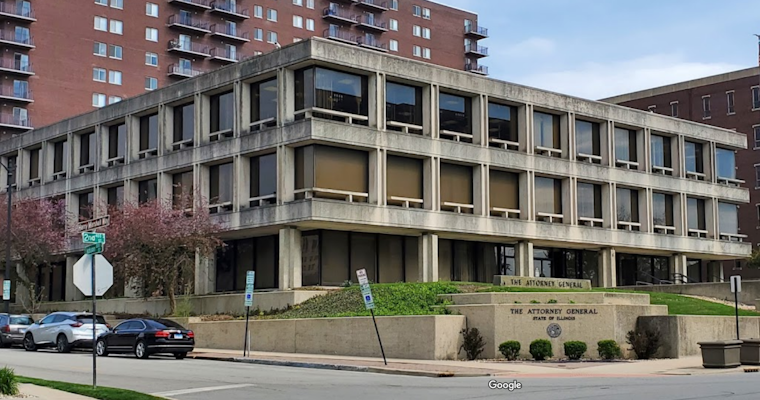
A coalition of 22 state attorneys general has mounted a challenge against Mississippi's permanent voter disenfranchisement laws for individuals convicted of felonies, a move spearheaded by Illinois Attorney General Kwame Raoul. According to a press release from Raoul's office, he has partnered with Connecticut Attorney General William Tong and District of Columbia Attorney General Brian Schwalb to file an amicus brief in the U.S. Court of Appeals for the 5th Circuit, which is considering the legality of these disenfranchisement practices.
Mississippi's controversial policy has been in the crosshairs after a panel of 5th Circuit judges deemed it as constituting cruel and unusual punishment, ordering a halt only for the decision to be vacated for a full court hearing. This series of legal back-and-forth showcases the contentious nature of voting rights debates in the country, especially in the South. Raoul firmly believes in the rehabilitation aspect of enfranchisement, stating, "The vast majority of states have come to recognize that restoring voting rights helps convicted people fully reintegrate into their communities after they have served their debt to society," and that "Restoring this fundamental right fosters civic participation and improves public safety," as per the statement from his office.
Currently, Mississippi's constitution prohibits people convicted of a variety of felonies from voting, a sanction that affected over 220,000 citizens in the 2022 election cycle alone. While there is a mechanism for reinstating voting rights through a gubernatorial pardon or a legislative override, it's an incredibly high bar that rarely sees success, with fewer than five people regaining this right annually. The attorneys general argue that Mississippi’s 1890-era law is outdated and out of step with the mainstream U.S. consensus, which leans towards the restoration of voting rights post-sentence, a reflection of an evolving perspective on criminal justice and citizenship.
The brief emphasizes the racially disparate impact of such laws; Mississippi's system traces its origins back to Reconstruction, when it was crafted with the explicit intent to curb black suffrage and ensure white political dominance. Even in 2022, close to 16% of the Black voting-age population in Mississippi was disenfranchised; this is not a relic of a bygone era but a present injustice that perpetuates inequality. Raoul, supported by a wide-spanning coalition including the attorneys general from California, Colorado, Delaware, Hawaii, Maine, Maryland, Massachusetts, Michigan, Minnesota, Nevada, New Jersey, New Mexico, New York, Oregon, Pennsylvania, Rhode Island, Vermont, Washington, and Wisconsin remains steadfast in the belief that the right to vote is a cornerstone of the nation, one that must be preserved and restored whenever unjustly rescinded.





