

























































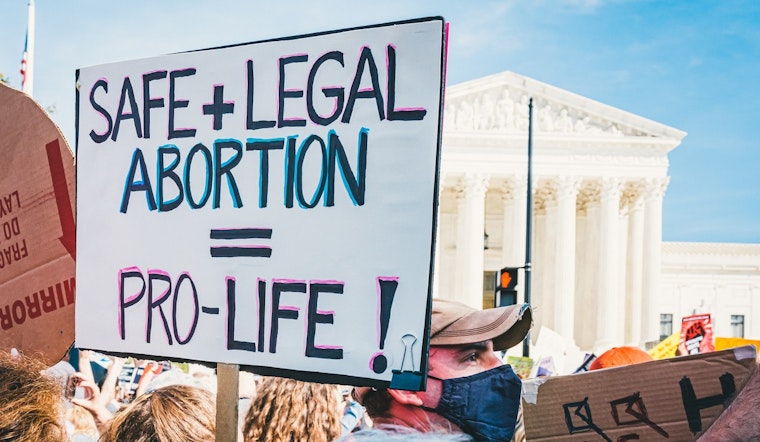
A pregnant woman in Texas has taken her fight against the state's stringent abortion laws to the courts. Kate Cox, a 31-year-old from the Dallas area, filed a lawsuit on Tuesday pleading for an emergency court order that will allow her to undergo an abortion in light of the fatal fetal diagnosis her pregnancy has received. Cox's fetus has been diagnosed with trisomy 18, a condition most commonly resulting in miscarriage, stillbirth, or death shortly after birth. Texas law, however, prevents her from terminating her pregnancy.
In what could be one of the first cases seeking a court-sanctioned abortion since Roe v. Wade was overturned, Cox is challenging the limitations of her state's strict abortion laws. According to a report by The New York Times, Texas has a ban in place from the point of fertilization and permits private citizens to sue anyone helping a woman obtain an abortion. Despite these odds, Cox is asking the court to act quickly to allow her to have an abortion, mentioning that her doctors are prohibited from performing the procedure as long as the fetus has a heartbeat.
The laws in Texas do provide exceptions in cases where the woman's health or life is at risk, but the parameters are vague and have effectively led to an environment where doctors are reluctant to proceed with what could legally be construed as an abortion. "Essentially, it was, as long as the baby has a heartbeat, there was nothing you could do in Texas," Cox told The New York Times during an interview.
The suit comes amidst an ongoing legal tussle over Texas' abortion legislation. The Center for Reproductive Rights, representing Cox, is also involved in a broader effort seeking to clarify situations in which abortions can legally proceed. Cox was compelled to reach out to the organization after witnessing the legal battles that ensued and receiving her grim prognosis on the same day. Cox's case looks to protect not only her right to treatment but also to shield her doctor from potential prosecution and her husband from the civil liability posed by the state's laws. "Our contention is that Kate falls within the medical exemption, but her doctors can't proceed and give her the medical care that she needs unless and until a court agrees," Cox's lawyer, Molly Duane, explained in the lawsuit obtained by The New York Times.
As detailed by KVUE, Cox's condition is compounded by the fact that her fetus is unlikely to survive and that continuing the pregnancy poses serious risks to her health due to previous cesarean sections. At 20 weeks pregnant, she faces the harsh reality that her state laws do not consider her situation an exception to the ban. The filing in Travis County comes on the heels of emotional testimonies and legal challenges that have sought to expose and address the dire consequences of Texas' restrictive abortion landscape.





