

























































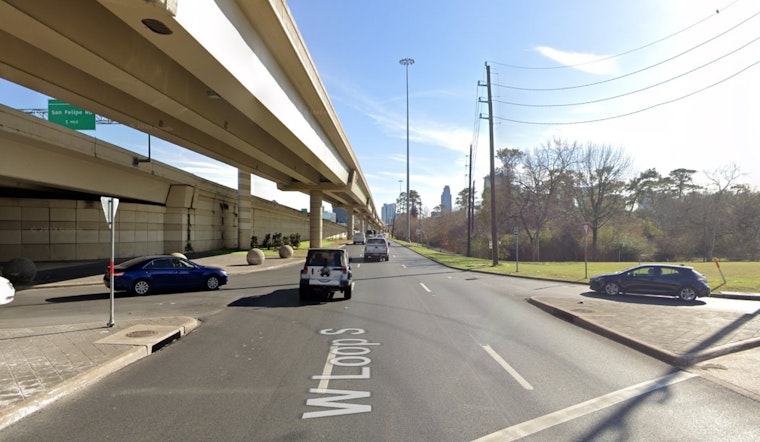
Houston has once again earned the dubious honor of having the most congested roadways in Texas, with the notorious 610 West Loop topping the chart as the state's worst traffic nightmare. In a city where sprawling highways are as much a symbol of the urban ethos as they are essential arteries for commuter travel, gridlock has become a familiar foe to locals, according to the reports by KHOU.
“It’s infamous," said Texann Jones, a former trucker whose experience with the 610 West Loop resonates with many a weary commuter. "Everybody avoids the West Loop as much as they can." While Houston takes the lead with six of the top 10 most congested roads, San Antonio drivers find a small reprieve, as the city's worst traffic stretch ranks a mere 27th in the state, as revealed by KENS5 in a recent study.
Alongside the 610 West Loop's top billing, Houston's I-69/59 from I-10 to 288 snagged the number two spot, while Dallas and Austin also contributed contenders for the most congested roadways, highlighting a statewide issue that spans beyond the city limits of Texas' sprawling metropolises. Data from Texas A&M’s Transportation Institute indicates that despite the increased adoption of the work-from-home culture, Texas drivers are still spending 7% more time in traffic than they did the year before, with the upward trend edging closer to pre-pandemic congestion levels.
While the annual traffic report serves as a guide for city planners to craft freeway and transportation projects, it underlines an uncomfortable truth about Texan infrastructure. Houston, known for an ever-expanding population and a cultural attachment to personal vehicles over public transit, sits at the heart of a self-made whirlwind of traffic jams. According to David Schrank, a Senior Research Scientist with TAMU, perpetual construction compounds the problem. "There’s a lot of construction in this state and in Houston.”
Yet, there remains a glimmer of hope for improvement through personal accountability and community effort. "You know, if everybody cooperates it would be much better and there wouldn’t be as much frustration," said Jones in a thread of optimism echoed by traffic experts who understand the significance of every individual's role in the larger mosaic of traffic management. As the state continues to balloon in population, equivalent to adding the entirety of Corpus Christi annually, the need for cooperation, along with smart planning, becomes ever more pressing in the grand Texan traffic tapestry.





