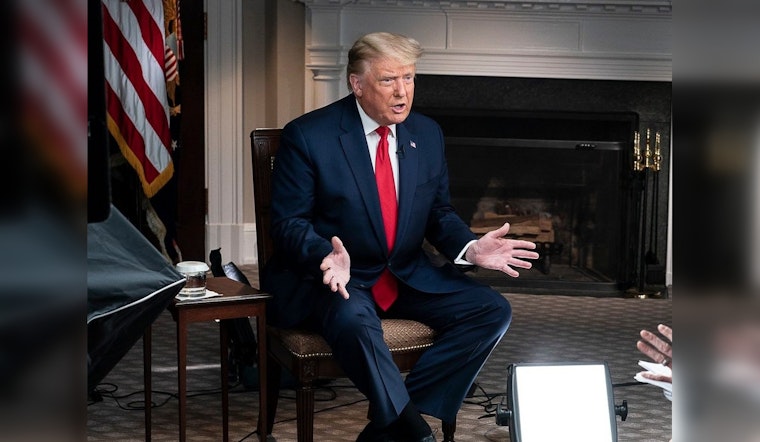
In a move that has sent shockwaves through the political landscape, Maine's Secretary of State Shenna Bellows made the call to disqualify former President Donald Trump from the state's Republican primary ballot. Bellows cited Section 3 of the 14th Amendment, declaring Trump ineligible for office due to his involvement in the January 6 Capitol riot, according to a report by CBS News.
While the decision was swiftly made, Bellows has stayed the effect of her ruling, pending an appeal that can be lodged within five days. "Given the compressed timeframe, the novel constitutional questions involved, the importance of this case, and impending ballot preparation deadlines, I will suspend the effect of my decision until the Superior Court rules on any appeal, or the time to appeal…has expired," Bellows said in a statement.
Trump's campaign wasted no time in responding to the ruling, planning an appeal against what they consider "the attempted theft of an election and the disenfranchisement of the American voter," a campaign spokesman, Steven Cheung said in a statement. Criticism came from within Trump's party ranks as well, with Republican Senator Susan Collins taking to social media to voice her view that "Maine voters should decide who wins the election – not a Secretary of State chosen by the Legislature," reported CBS News.
The discord brought forth by Maine's action is reflecting a broader national debate, especially within the context of the politically and culturally divided 'two Maines' as noted by the Boston Globe. Reactions from the public have been as polarized as the political climate, ranging from disappointment to vindication. Supporters and critics alike in Maine are taking stands, highlighting the divide between the northern, more conservative regions and the progressive southern axis of the state.
This move by Maine's Secretary of State marks the first instance of an election official unilaterally making such a decision, diverging from the usual court-driven process. The repercussions are varied, with some voters expressing their right to choose is being infringed while others, such as retiree Jim Webb, argue strictly by the book, "It’s called the 14th Amendment. We can’t choose what amendments we decided to obey," he told the Boston Globe.