

























































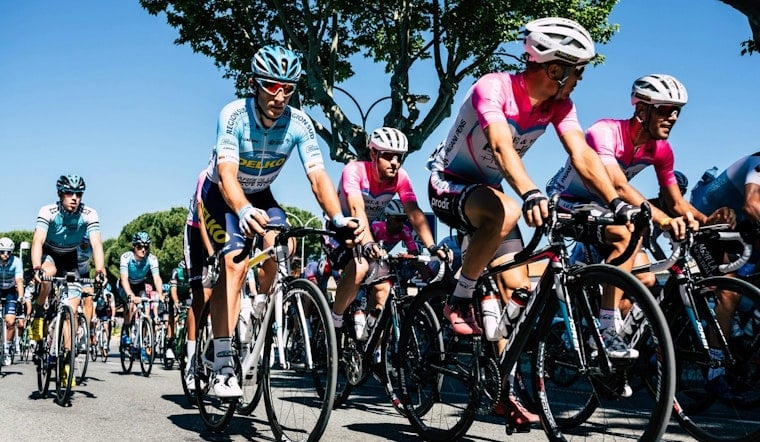
Hundreds of cyclists rolled out from Lexington this weekend for the annual Tour de Cure, pedaling routes that stretched from five to 100 miles and pushed across the border into southern New Hampshire, all in pursuit of a diabetes cure. Organizers hoped to raise more than $450,000 through the ride, with the total climbing toward a $500,000 goal by the time riders crossed the finish line.
Among the riders was John Drowen, who has taken part in the Tour de Cure for 23 consecutive years, according to WHDH. Drowen lost his sister to diabetes in 2003, and the loss has kept him coming back to the ride every year since. Over that span, he has personally raised more than $100,000 for the cause, the outlet reports.
The event has been held in Massachusetts for more than 30 years and has returned to Lexington for four consecutive years, per WHDH's report. This year's Lexington ride relocated its host venue to The Core at Lexington at 29 Hartwell Avenue, hosted by Anchor Line Partners, after departing in prior years from Lexington Labs at 10 Maguire Road, according to the American Diabetes Association.
Red Jerseys Lead the Way
Among the hundreds of participants were Red Riders, cyclists living with Type 1 or Type 2 diabetes who wear distinct red jerseys and roll out at the front of each route. The tradition dates back to 2007, when Tour de Cure organizers created the designation specifically to give visibility to riders managing the disease and to offer peer encouragement to others on the course, according to Duly Health and Care.
The routes themselves carried riders past Revolutionary War landmarks, including the Lexington Battle Green and the Old North Bridge in Concord, a stretch that local organizers have branded a Revolutionary Tour, per Lex250. Registration required a $10 fee along with a fundraising commitment of $250 for adult riders and $50 for participants under 18, the same source notes. Once the riding was done, a post-ride festival awaited with a beer garden, massages, and a kid zone.
A Statewide Burden Behind the Ride
The fundraising push lands against a sobering backdrop for Massachusetts. Roughly 560,000 adults in the state, about 8.5% of the adult population, live with diagnosed diabetes, with an estimated 31,000 to 33,400 new adult cases diagnosed each year, according to the American Diabetes Association. Diagnosed diabetes costs Massachusetts an estimated $7.3 billion annually, including $6.6 billion in direct medical expenses and $700 million in lost workplace productivity, the association reports.
Federal funding has also poured into the state's research institutions. The National Institute of Diabetes and Digestive and Kidney Diseases at the NIH provided more than $148.7 million for diabetes-related research projects across Massachusetts institutions in 2025, according to the same association data. Nationwide, more than 40 million Americans live with diabetes, including an estimated 11 million who remain undiagnosed, while more than 155 million live with diabetes or prediabetes.
A National Ride With Local Roots
The Tour de Cure series began in 1991 and has grown into a flagship national fundraising effort that draws more than 6,000 cyclists across multiple states each year, per a history of the event. The American Diabetes Association awards research grants twice a year, and funds collected by June 30 help determine how much it can commit to its summer grant round, meaning rides like Lexington's timely fundraising has a direct bearing on how quickly peer-reviewed research gets funded.
For riders like Drowen, though, the numbers and grant cycles sit alongside something more personal: two decades of showing up on two wheels for a sister who isn't there to see it. Hundreds of others joined him on the road through Lexington and into New Hampshire this weekend, chipping away at a goal that organizers hope will edge past half a million dollars.



