

























































In a significant technological advancement, researchers at MIT in collaboration with the Chinese University of Hong Kong have narrowed the gap between optical device design and manufacturing, heralding a potential boost in device accuracy and efficiency. As reported by MIT News, this breakthrough involves a machine learning-based method that more closely aligns end products with their original specifications.
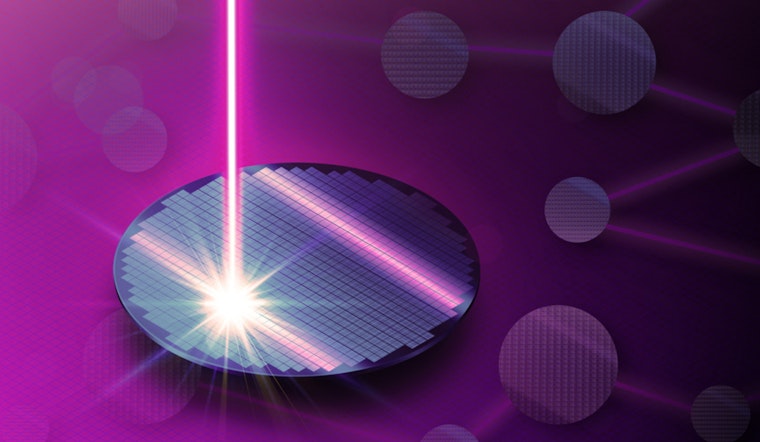
The methodology is grounded in photolithography, a technique crucial for producing intricate patterns on surfaces, key to creating everything from advanced lenses to computer chips. However, slight variations inherent in current manufacturing can cause the final product to deviate from expectations. Machine learning is brought into play to build a digital simulator tailored to match a particular photolithography system, using real, rather than theoretical, data to train the system. "This idea sounds simple, but the reasons people haven’t tried this before are that real data can be expensive and there are no precedents for how to effectively coordinate the software and hardware to build a high-fidelity dataset," Cheng Zheng, a mechanical engineering graduate student and co-lead author of the research paper, said in a statement obtained by MIT News.
Coined as neural lithography, this process begins with crafting a photolithography simulator founded on physics-based principles, subsequently enhanced by a neural network. The network predicates upon experimental data collected from a system’s fabrication process. Once the network is trained, it predicts deviations, assisting in the creation of closer-to-design-specification devices. "The performance of learned simulators depends on the data fed in, and data artificially generated from equations can’t cover real-world deviations, which is why it is important to have real-world data," elaborates Zheng.
Two digital simulators interact within this pioneering method: one modeling the optics, concerned with the projection of light, and the other a resist model that reflects how photochemical reactions sculpt surface features. These simulations thereafter connect to a physics-based model that forecasts a fabricated device's performance in tasks such as image production with computational cameras. "With our simulator, the fabricated object can get the best possible performance on a downstream task," Guangyuan Zhao, a graduate student at the Chinese University of Hong Kong and co-lead author of the paper, told MIT News.
The researchers have put their method to the test by successfully creating a holographic element portraying a precise butterfly image, and a multilevel diffraction lens that demonstrated topnotch image quality. Looking ahead, there are plans to refine their algorithms for even more complex devices and test their system with consumer-level cameras while adapting the method to various types of photolithography processes. The research, aside from pushing the boundaries in advanced manufacturing, promises wider applications that span from mobile photography to medical devices, marking a stride in the technological evolution of optical systems.





