

























































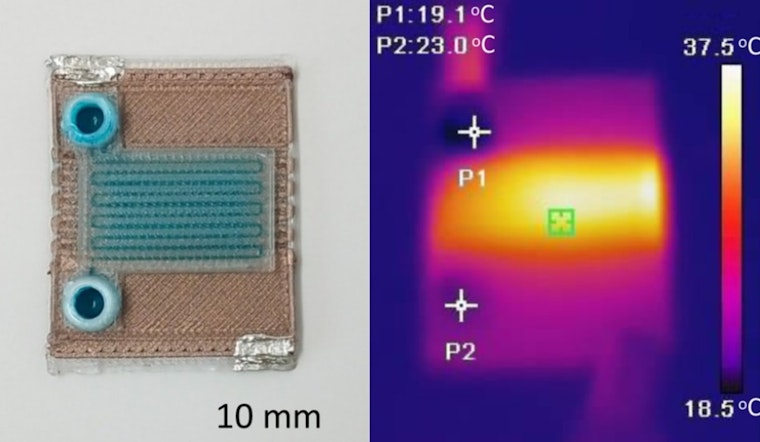
In a significant breakthrough, researchers at MIT have developed a method to 3D print self-heating microfluidic devices, potentially revolutionizing the way diseases are detected and analyzed. These miniature chemical reactors, equipped with internal heating elements, streamline the detection process for numerous diseases by allowing fluids to maintain the specific temperatures necessary for chemical reactions.
Typically produced in expensive clean rooms, microfluidic devices with built-in heating have previously required luxurious elements such as gold or platinum, according to a report by MIT News. But now, the one-step manufacturing process developed by the MIT team utilizes 3D printing with two types of materials, including a modified version of the commonly used polymer polylactic acid (PLA). The altered PLA is embedded with copper nanoparticles, which surprisingly transform it into a conductor, a feat that Luis Fernando Velásquez-García, a principal scientist at MIT's Microsystems Technology Laboratories and senior author of the study, admits still baffles the team.
"It is amazing when you think about it because the PLA material is a dielectric, but when you put in these nanoparticle impurities, it completely changes the physical properties. This is something we don’t fully understand yet, but it happens, and it is repeatable," Velásquez-García told MIT News. This innovation comes at a fraction of the cost of traditional methods, with materials for a microfluidic device amounting to roughly $2.
The implications of being able to efficiently create these devices could be far-reaching, especially for resource-strapped regions in developing countries where costly lab equipment for diagnostics is hard to come by. "This is really a way to democratize this technology," remarked Velásquez-García, highlighting the accessibility and scalability potential of the new method. Notwithstanding the current limitations of PLA, which starts degrading at about 50 degrees Celsius, the MIT researchers are already tackling these issues. They aim to incorporate materials that can withstand higher temperatures and add functionality for precise temperature control.
Peers in the scientific community have acknowledged the simplicity and potential of these chemically reactive devices. Norihisa Miki, a mechanical engineering professor at Keio University in Tokyo who was not involved with the study, commended the project for its simplicity and potential applications. Meanwhile, Niclas Roxhed of Sweden's KTH Royal Institute of Technology pointed out the exciting possibilities in biological sample processing and even hypothesized implantable uses given the degradability of PLA. This research, which could pivot the future of microfluidic applications, was partly funded by the Empiriko Corporation and a fellowship from the La Caixa Foundation.





