

























































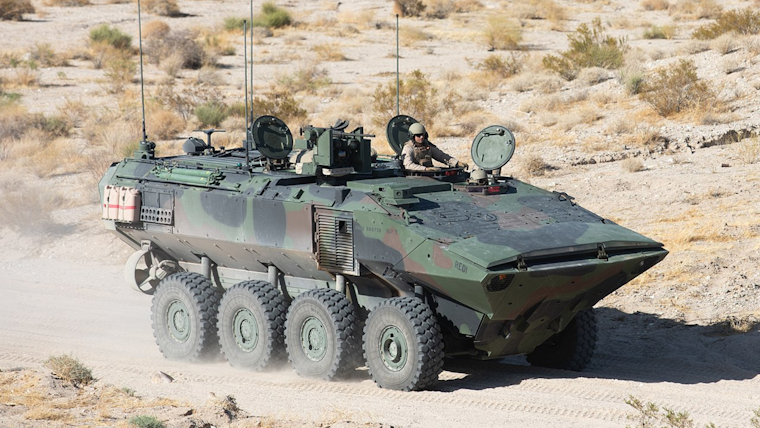
A tragic training mishap at Camp Pendleton has claimed the life of a U.S. Marine, now identified as a Michigan native, Sgt. Matthew K. Bylski. According to a statement obtained by The San Diego Union-Tribune, the accident occurred during a routine training exercise on Tuesday evening when the Amphibious Combat Vehicle (ACV) Bylski was commanding rolled over. He joined the Marine Corps in January 2019 and was a trained ACV crewman stationed with Battalion Landing Team 1/5 of the 15th Marine Expeditionary Unit.
The rollover incident left one other Marine hospitalized in good condition, while the remaining thirteen were treated and released from a mixture of hospitals and at the scene, as reported by NBC San Diego. Sgt. Bylski, who had received several awards, including two Navy and Marine Corps Achievement Medals, was said to have died making a ground movement around 6 p.m.
"Words fail to express our sorrow at the tragic loss of Sgt. Bylski, an outstanding Marine and a leader within his platoon," said Col. Sean Dynan, the commanding officer of the 15th MEU. His statement, extolling the quality and impact of the marine, was provided by both news outlets. The Marine's death is currently under investigation, and the details of the mishap are being scrutinized, with the Marine Corps having yet to disclose additional specifics.
The incident draws attention to ongoing concerns with the ACV fleet at Camp Pendleton. Before being involved in the recent tragedy, the ACVs had resumed operations after a series of past suspensions due to various technical mishaps, as NBC San Diego detailed. A towing mechanism issue had seen a pause in their amphibious usage in 2021, after which two vehicles encountered issues in July 2022, leading to a second suspension of waterborne operations by Lt. Gen. David Furness. Only after 22 days had this ban been lifted before another incident triggered its reinstatement. Despite these concerns, training on land for ACVs continued unhindered.
These high-tech vehicles were introduced to replace the aging Amphibious Assault Vehicles (AAVs). This decision followed a previous tragedy where nine servicemembers lost their lives after their AAV sank during a training exercise.





-4.webp?w=160&h=400&fit=crop&crop=edges)


