

























































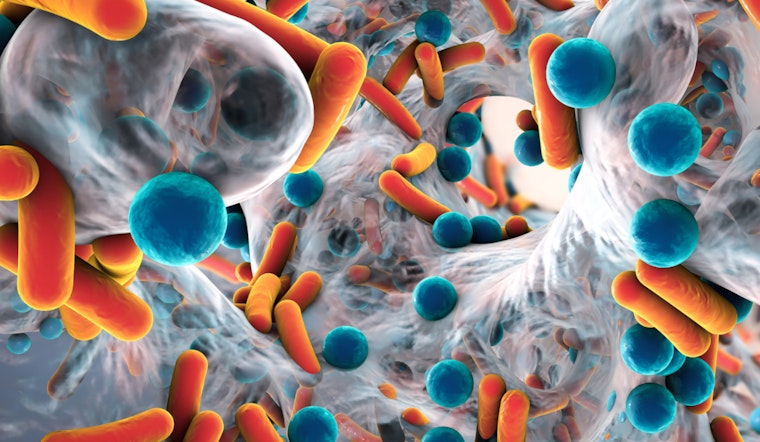
In what could be a turning point in the fight against menacing superbugs, a team from the University of Massachusetts Amherst, in conjunction with Microbiotix, claims to have unlocked a method to undermine the mechanisms that make certain bacteria impervious to antibiotics. According to UMass Amherst News, these researchers have developed a test that could lead to drugs targeting the Type 3 secretion system, a pathway critical for microbial invasion into host cells.
The Centers for Disease Control and Prevention state that antibiotic-resistant infections strike 2.8 million Americans annually, setting off alarm bells across the medical realm. This Massachusetts-led group's findings offer a glimmer of hope as their recent paper in ACS Infectious Diseases outlines their approach, which doesn't kill the pathogen head-on but disrupts its invasion strategy—pathogens require PopB and PopD proteins to penetrate host cells, and the new test seeks to block this process, potentially halting the bacteria in their tracks without triggering resistance.
Focusing on the crux, UMass Amherst associate professor and study's senior author Alejandro Heuck explained, “If we don’t try to kill the pathogen, then there’s no chance for it to develop resistance—we’re just sabotaging its machine, the pathogen is still alive; it’s just ineffective, and the host has time to use its natural defenses to get rid of the pathogen.” This line of attack diverts from the standard antibiotic approach, which often leads to resistance through bacterial countermeasures like efflux pumps that recognize and eject the antibiotics, however, this new test promises a strategy to counteract the growing antibiotic-resistance crisis.
Bearing the hallmarks of innovation, in their search for a molecule that can thwart the assembly of the aforementioned “translocon,” the researchers utilized an ingenious method involving luciferases—an enzyme causing fireflies to glow—that allowed them to witness the breaching of cellular walls in real-time; this glow signified a successful invasion by PopD and PopB proteins, while a lack of light indicated successful inhibition, making it a tangible and immediate test for potential therapeutic compounds. “Then we know which molecules break the translocon,” said Heuck about the cells that remain non-luminous.
This critical research has not only laid the groundwork for potential new pharmacological defenses but has also significantly advanced the scientific community's understanding of pathogen behavior. It is graciously funded by the UMass Amherst Institute for Applied Life Sciences, the Healey Endowment Grant, and the National Institutes of Health and is being hailed as a significant stride toward defusing the ticking time bomb of superbugs.



