

























































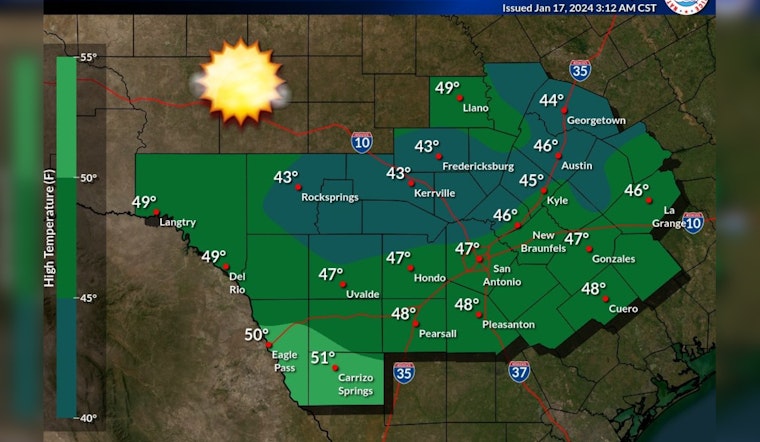
Austin residents are bracing for frigid temperatures as the National Weather Service (NWS) declares that a Hard Freeze Warning remains in effect until 10 AM CST Wednesday. With forecasts indicating lows down to 7 degrees above zero, the city is facing its most severe cold snap since February 2021. The warning emphasizes the risk to crops, sensitive vegetation, and potentially unprotected outdoor plumbing, urging residents to wrap and drain pipes, among other precautions.
Accompanying the freeze, Wind Chill Advisories warn of "feels-like" temperatures hovering around zero. As reported by KVUE News, Central Texas is set to experience the worst of this arctic onslaught Tuesday night into Wednesday morning, though temperatures are predicted to rise above freezing by Wednesday afternoon.
Temperatures will warm into the 40s to low 50s this afternoon under mostly sunny skies, though a Hard Freeze Warning and Wind Chill Advisory remain in effect through the mid-morning hours. Another cold front arrives late Thursday into Friday, with rain chances early next week. pic.twitter.com/qOozFkBMAg
— NWS Austin/San Antonio (@NWSSanAntonio) January 17, 2024
Following this brief respite, residents should not grow too comfortable. Another blast of cold air is on its way, with a forecast by the NWS predicting gusty conditions and highs returning to the 40s by Friday. The weekend also looks chilly, with Saturday's mostly sunny skies giving way to a high near 42 and winds that could gust as high as 20 mph.
According to NWS weather forecasts, after a few days of cold grips in the region, the mercury is expected to bounce back next week. A disturbance brewing on the horizon suggests potential showers Sunday and thunderstorms are possible Monday, with a high near 61.
The looming wet weather carries its concerns, with NWS reports addressing potential inches of rainfall. The chance of showers and possibly a thunderstorm Monday evening stands at 60 percent, with similar odds for continued showers into Tuesday. The community is encouraged to monitor the changing conditions and remain prepared for the varying threats associated with such unpredictable weather patterns.



