

























































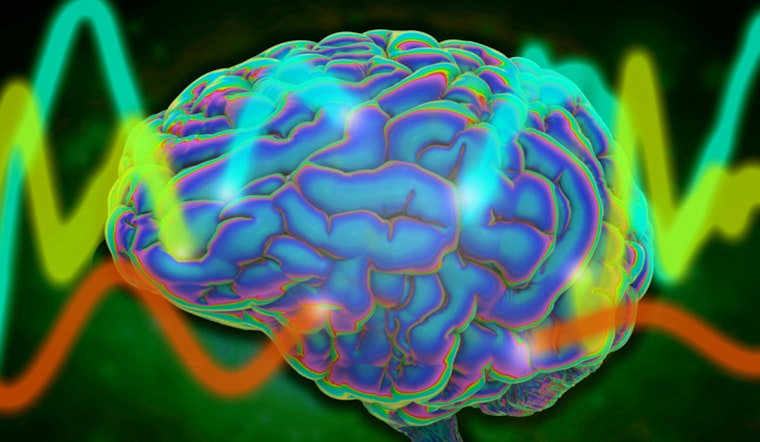
In what could be a game-changer for understanding the brain's inner mechanics, MIT and Vanderbilt University researchers have pinpointed a consistent pattern of brain wave frequencies across various mammalian species — a discovery highlighting the cortex’s layered orchestration of cognitive functions. The team's investigation, which spans multiple regions of the brain and takes into account creatures from mice to humans, shed light on the distinct electrical activities inherent to the brain’s structure.
The cortex, home to neurons organized into six layers, showcases differing electrical wave patterns known for their associations with various brain functions. In the topmost layers, rapid, gamma waves reign supreme, whereas, in the deeper regions, the pace slows to alpha and beta waves. “When you see something that consistent and ubiquitous across cortex, it’s playing a very fundamental role in what the cortex does,” Earl Miller, a Picower Professor of Neuroscience at MIT and senior author of the study, emphasized the significance of these rhythm patterns.
This new research could unveil the mysteries behind some brain disorders, notably epilepsy and attention deficit hyperactivity disorder (ADHD), if proven to be a consequence of these rhythmic discrepancies. “Overly synchronous neural activity is known to play a role in epilepsy, and now we suspect that different pathologies of synchrony may contribute to many brain disorders, including disorders of perception, attention, memory, and motor control,” Robert Desimone, director of MIT’s McGovern Institute for Brain Research, told MIT News.
Their methodology, invoking a new algorithm dubbed FLIP (frequency-based layer identification procedure), enabled an intricate layer-by-layer analysis. With data sourced from multiple institutions, including MIT and Vanderbilt, the technique cut through the challenge of pinpointing an electrode's position within the sub-millimeter layers of the cortex. Alex Major, MIT postdoc, highlighted the importance of this technological leap, “This work is exciting because it is both informative of a fundamental microcircuit pattern and provides a robust new technique for studying the brain.”
The team's observations also support a mechanism where the cortex's architecture intertwines new information, conveyed by high-frequency oscillations, with existing memories and processes, epitomized by low-frequency waves. André Bastos, an assistant professor of psychology at Vanderbilt University and another senior author of the study, explained the possible implications. “The high-level implication is that the cortex has multiple mechanisms involving both anatomy and oscillation to separate ‘external’ from ‘internal’ information.”
As research continues, the implications of these findings reach further, potentially paving the way for new strategies to diagnose and treat neurological conditions. It could also provide insight into the brain's universal cognitive mechanisms, as Diego Mendoza-Halliday, MIT research scientist and lead author of the study, aims to foster more standardized reporting which could reveal patterns across diverse brain functions.





