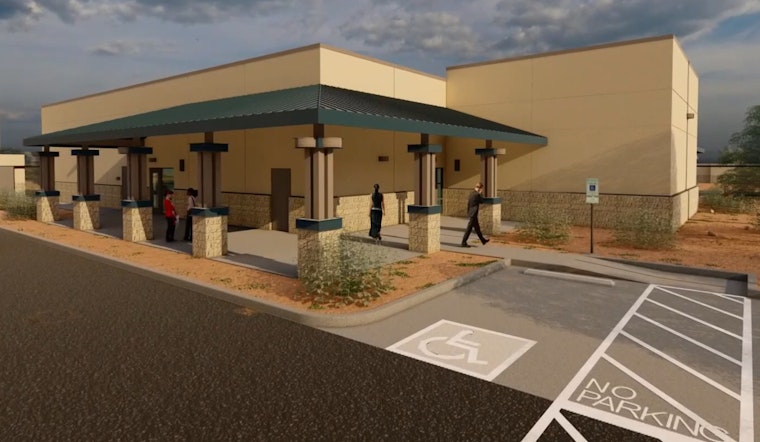
The Buckeye Police Department is preparing for a safer future, with construction underway for a new state-of-the-art 911 communications center to accommodate the city's growing population and rising emergency call volume. Deputy Chief Bob Sanders emphasized the necessity of the new 12,000-square-foot complex, stating, "We're ready for the future, ready to meet the needs of the citizens, and provide the high level of service they expect from our officers and dispatchers," in a statement to 12 News.
With a $16 million price tag funded from the city's general fund, the center will feature advanced technology, including a real-time crime center utilizing license plate readers and traffic cameras. This expansion will increase its workforce capacity from six to 12 workstations to accommodate the department's current roster of 16 dispatchers and four supervisors. Deputy Chief Sanders noted, "Our call volume increased by 23% last year, it's a lot," emphasizing the pressure on an already cramped facility that is struggling but still maintains highly professional response times under five minutes.
Located near the department's training and evidence center, the new facility aims to double its dispatch capacity as Sanders revealed in an interview with ABC15, "It'll allow us to increase our capacity of workstations from six to 12 so that'll take us way into the future." The anticipation of continued call volume growth through 2030 drives the infrastructure investment, with Buckeye's population explosion from 20,000 to already 100,000 residents presenting formidable challenges and opportunities in equal measure.
Local sentiments echo the urgency and optimism, where lifelong resident Shelby Burkett considers the expansion a response to a city whose size and needs are evolving significantly, while Alejandro Ochoa, another Buckeye native, expresses hope that "In the future, we’ll get better just because they’ll get used to it and they’ll start learning," both reflecting on the city's changing landscape and the expectations of its people. With the current state of affairs dispatchers now dispatching within 30 seconds per their standard the new center could be operational as early as next year, signaling a new era for emergency response in one of the country’s fastest-growing cities.