

























































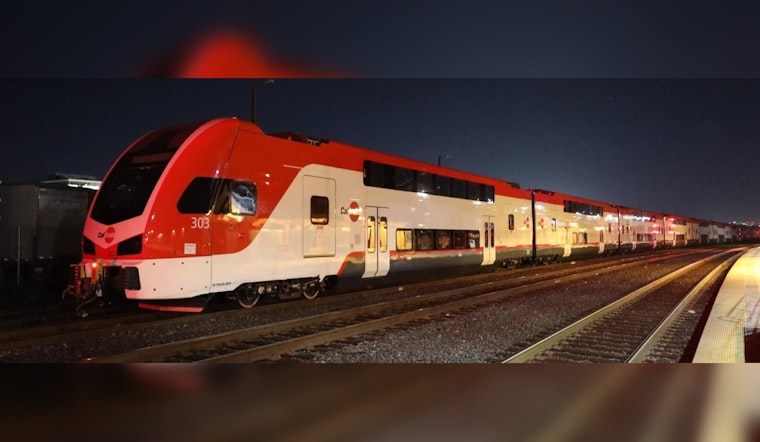
Caltrain is gearing up to offer quicker and more frequent service between San Francisco and San Jose by Fall 2024, stepping into the future with electric trains. According to Caltrain's recent announcement, three of their 23 electric train sets have finished a crucial phase of testing. To ensure maximum safety and quality, these new trains endured a thousand miles along the Caltrain corridor as they prepare to revolutionize commutes.
The full fleet is undergoing rigorous testing before passenger service kicks off in 2024. As Executive Director Michelle Bouchard underscored, "Rigorous testing of equipment is how we make sure that our corridor remains safe for passengers and the communities we serve." With six train sets currently on the property and more on their way from Stadler US in Utah, this marks a significant stride in the history of American rail transport—an electrification project impressive in both scope and scale.
Weekday commuters can anticipate peak-hour trains hitting 79 stations per hour, a marked increase from the current 66. This expansion is not just about numbers; it's forecast to carve significant time off commutes, with express services between major hubs down to under 60 minutes—a shave off the 100-minute local service time—according to details obtained by Hoodline. Amenities such as on-board Wi-Fi and electrical outlets are part of the updated passenger experience.
This electrification isn't just for convenience; it's also an environmental leap forward, slashing emissions equivalent to taking 55,000 cars annually off the road, as Brian Shaw, Caltrain Citizen Advisory Committee Chair, pointed out. Commuter satisfaction is high, with surveys showing nearly 80% positive responses from riders, suggesting the electric transition will likely attract more riders away from congested roads. As Rosanne Foust, CEO of the San Mateo County Economic Development Association, told Hoodline, the change bodes well for the regional economy with its potential for easier commutes and on-board amenities providing yet another benefit over driving.
As Caltrain rides into its 160th year, the electrification plan encompasses not only a nod to the future with California's impending High-Speed Rail network but also a commitment to equity. The increase in train frequency and reduced pollution are set to enhance access for communities previously marginalized by less frequent service and the health detriments of diesel fumes.





