

























































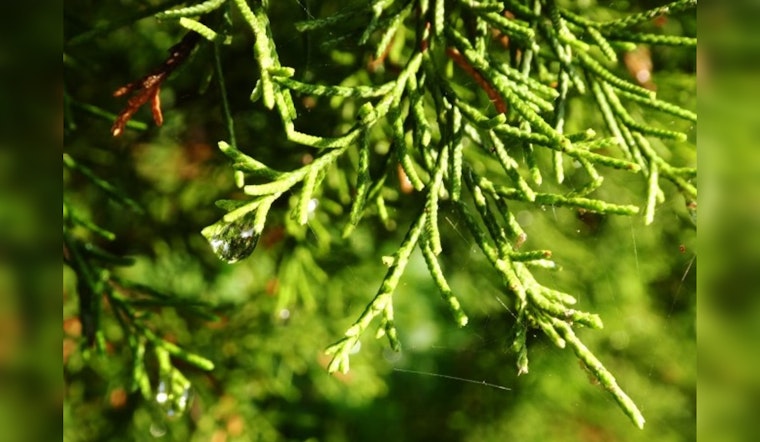
Central Texans are bracing for what's shaping up to be a particularly harsh cedar allergy season. On the last day of 2023, cedar pollen counts skyrocketed to an overwhelming 18,000 grains per cubic meter. The levels marked a 16-fold increase from December's high and continued to plague residents with a slightly lower yet still severe count of 15,354 gr/m3 on New Year's Day, as reported by KVUE.
Another cold front is predicted to further unsettle the allergens, potentially leading to even higher spikes in pollen counts. Jonathan Motsinger, Central Texas operations department head with the Texas A&M Forest Service, explained that "the cold is what triggers the pollen cones on the male trees to release the pollen." This makes for a relentless cycle, as the cold fronts seem poised to continue sweeping through the area, according to KXAN.
It's not just the cold that's to blame. Motsinger noted in the same interview that there's no escape from the ash juniper trees, which are plentiful in Austin, saying, "There’s not really anywhere that you can get away from it, it’s just going to be everywhere." Wind plays a significant role in dispersing the allergens, which means that even those areas not densely populated with juniper trees will feel the impact of these heightened pollen levels, as per KXAN.
Residents are advised to prepare for more challenging days ahead in the fight against cedar fever. With high levels of mold and Alternaria also being tracked, those with allergies are set to face a trying start to the new year, in accordance with KVUE.





