

























































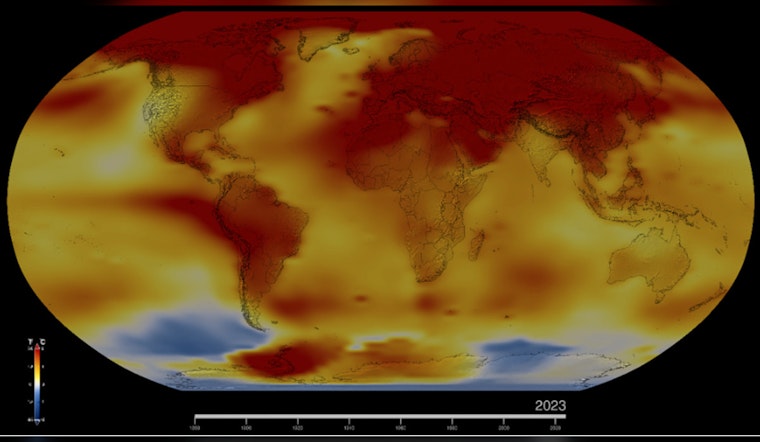
Last year, the planet felt the heat as NASA confirmed that 2023 set a new distressing benchmark, becoming the warmest year on record. Earth's average surface temperature soared to approximately 2.1 degrees Fahrenheit above the 1951-1980 baseline period, as per findings by NASA's Goddard Institute for Space Studies (GISS). The data reveals a stark reminder of the intensifying climate crisis humanity faces.
NASA Administrator Bill Nelson emphasized the gravity of the situation, saying, "NASA and NOAA’s global temperature report confirms what billions of people around the world experienced last year; we are facing a climate crisis." Nelson highlighted a list of environmental tumults from "extreme heat, to wildfires, to rising sea levels," and pledged continued action to mitigate the impact. "There's still more work to be done, but President Biden and communities across America are taking more action than ever to reduce climate risks and help communities become more resilient," Nelson told NASA.
The data didn't come out of the blue—as early as June, thermometers began setting records globally with July turning out to be the hottest month ever documented. Overarching this annual scale is the fact that the past decade has consecutively etched itself as the top ten warmest years since modern temperature record-keeping began circa 1880.
Gavin Schmidt, director of GISS, unpacked the driving forces behind these numbers, stating, "The exceptional warming that we’re experiencing is not something we’ve seen before in human history." Schmidt elaborated that the heat spikes and catastrophic weather events underscore the primary catalyst—our reliance on fossil fuels. Nevertheless, even in the face of certain cooling events such as volcanic eruptions or periodic aerosols, "we will continue to break records as long as greenhouse gas emissions keep going up," Schmidt remarked to NASA.
To forge ahead against this global challenge, NASA Deputy Administrator Pam Melroy pointed to the consequential steps being taken, mentioning "Recent legislation has delivered the U.S. government’s largest-ever climate investment, including billions to strengthen America’s resilience to the increasing impacts of the climate crisis." This underscores a proactive stance, while NASA and a fleet of Earth observing satellites continue to beam down critical climate data for informed decision-making, according to a statement from Melroy to NASA.
Complementing NASA's assessment, independent analyses by NOAA and the UK's Hadley Centre upheld the conclusion that 2023's temperatures were hitting the ceiling since record-keeping dawned. These inter-agency corroborations reflect a palpable long-term uptrend in global temperatures over recent decades, underscoring the urgency for climate action.
With an aim for transparency and wider data accessibility, the U.S. Government has initiated the U.S. Greenhouse Gas Center and similar collaborations to ensure critical climate data doesn't stay siloed but becomes a tool for policymakers and the public alike. This fulcrum of information sharing is seen as a crucial step in the bid to understand and combat the climate phenomena that are reshaping our world.



