

























































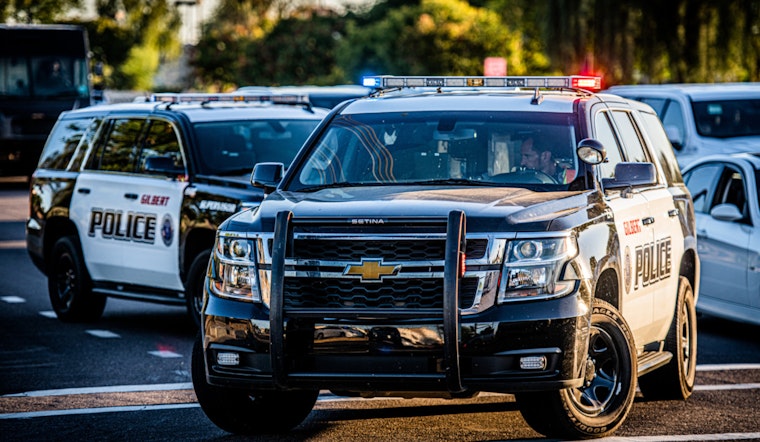
The Gilbert Police Department reported that a confrontation with 40-year-old Brett Shanahan, a Marine Corps veteran dealing with post-traumatic stress disorder (PTSD), ended in his death after he allegedly threatened officers with firearms on Sunday. Shanahan, whom his family said was a great father and friend, had been wearing a bulletproof vest while armed with a handgun and a rifle when the incident occurred, as stated in a 12News report.
Witness Ryan Bartman recounted to 12News that Shanahan's vehicle was driven aggressively into the neighborhood near Greenfield and Knox roads, detailing how "I saw the truck pull up in the middle of the road and I saw about 4 police officers open fire." After making threats towards the officers and ignoring commands to stop, Shanahan was shot, police say. The incident, which took place in the vicinity of Crossroads District Park but resulted in no injuries to the public or officers, left witnesses hearing what they described as 10 to 15 gunshots that sounded like "lighting off firecrackers," attested by neighbor Clay Crohn in an interview with 12News.
In light of the tragedy, Shanahan's wife, Sabrina, is determined to elevate the conversation about PTSD. "It is our prayer that through this tragedy, just one life can be saved by getting help and using the resources available," she expressed to 12News. The urgency of this cause is underscored by data from the U.S. Department of Veteran Affairs, suggesting that 7% of veterans will experience PTSD at some point in their lives.
Highlighting the complexity of PTSD, Dr. Dara Rampersad, the chief psychologist at BluePaz, explained, "It’s a debilitating illness over time if left untreated," adding that symptoms such as severe flashbacks, nightmares, and even hallucinations from sleep deprivation could change a person's behavior. Dr. Rampersad emphasized the effectiveness of cognitive behavioral therapy as a treatment and the power of a strong support system in aiding recovery. "I would love people to know that there is hope in this illness, there is a light at the end of the tunnel if you stick with treatment and trust a provider that can help you," he told 12News.
For those struggling with PTSD or concerned about others who might be, immediate assistance is available. Calling 988 connects individuals to a crisis counselor. Veterans specifically are encouraged to press "1" after dialing to reach a qualified veterans crisis responder. The U.S. Department of Veterans Affairs provides these resources to support individuals in crisis and foster an environment where seeking help becomes a prioritized act of resilience.





