

























































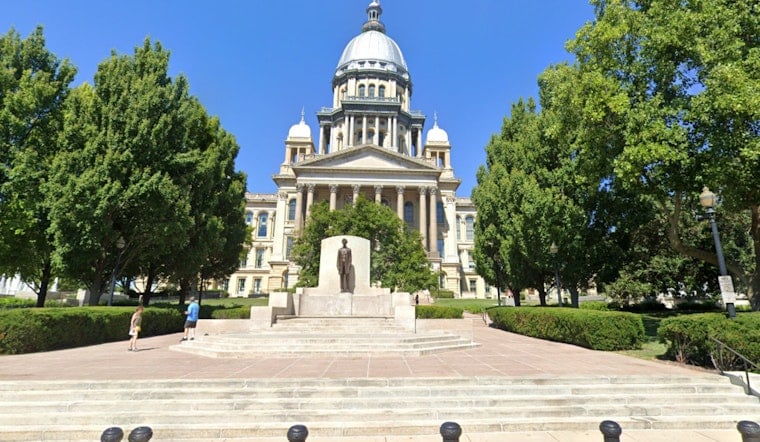
Illinois lawmakers have their plates full as they return to Springfield for a legislative session peppered with controversial issues, despite being cast under the shadow of a looming primary season. The agenda features heavy hitters like funding for migrants flooding into Chicago, the establishment of the first elected school board for the city's public schools, and a tug-of-war over taxpayer dollars.
The Democrat-controlled legislature faces a time crunch, with a meager two months to finesse a 20-district map for Chicago's incoming elected school board, a deadline set less than two weeks after the March 19 primary. As per the Chicago Tribune, Governor J.B. Pritzker and legislators also grapple with the financial implications of Illinois' role in the national migrant crisis, heightened as the state braces for a surge of asylum-seekers rerouted by other states.
With state revenues looking up, the administration hopes to address a $640 million financial commitment to the migrant issue, hoping that the current $1.4 billion revenue surplus will mend a hole in the budget of the Illinois Department of Human Services. However, as House Speaker Emanuel “Chris” Welch points out, "There’s no definitive answer on this," signaling complex budget talks ahead.
Issues of social equity further complicate matters. Senate President Don Harmon has vocalized the necessity of addressing historical inequalities while doling out aid, stating, "If we’re going to provide funding to deal with that crisis, we’re going to have to provide funding for crises that have existed in our communities for generations." His reflection mirrors concerns from a segment of the legislature's Black Caucus, asserting that solving new problems shouldn't eclipse struggles entrenched in Illinois' history.
The spring session, which also eyes education form in the form of a new early childhood agency, may be influenced by an election year's typical hesitance to tackle divisive issues. Northern Public Radio draws light to Kent Redfield, a professor emeritus of political science at the University of Illinois Springfield, who surmises, “The overall goal pre-primary is to do as little as possible as quickly as possible.” With a deadline for adjournment set for May 24, legislators must navigate the political minefield in swift order, crafting a budget that speaks as much to practical statewide needs as it does to the intense scrutiny of an electorate poised to judge their every move at the polls.




