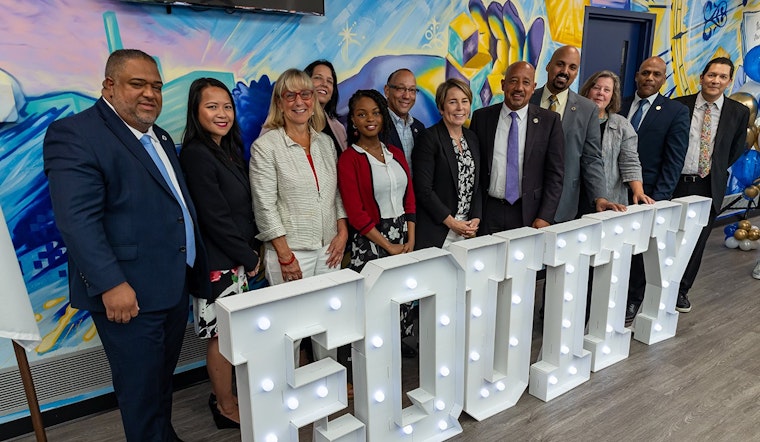
In a landmark move for educational accessibility, the Healey-Driscoll Administration of Massachusetts has rolled out the Massachusetts Application for State Financial Aid (MASFA), enabling undocumented college students to secure state need-based aid for the first time.
Announced today, the form is a beacon of hope for students excluded from the Free Application for Federal Student Aid (FAFSA), and the MASFA comes on the heels of the Tuition Equity Law, passed last August, which granted in-state tuition rates to students with at least three years of high school education in Massachusetts. Regardless of immigration status, students eligible for in-state tuition began reaping the benefits from the Fall 2023 semester. According to the press release, the state stresses the importance of applications being submitted before the deadlines of May 1 and June 30, 2024, to obtain aid for the 2023-2024 academic year.
Under the "High School Completer" pathway carved out by the Tuition Equity Law, students vie for the same eligibility criteria already in place for different financial aid programs. "Quality higher education should be accessible to all Massachusetts high school graduates," Governor Healey affirmed, acknowledging the integral role of these students in the fabric of Massachusetts communities and their future contributions to the state's workforce.
Lieutenant Governor Driscoll hailed the year's advancements in educational access, adding to the achievements with the MASFA. Meanwhile, Secretary of Education Patrick Tutwiler emphasized that the form opens doors to millions in aid, potentially altering lives for numerous students across Massachusetts's higher education institutions. Higher education Commissioner Noe Ortega touted the MASFA as a vital resource in promoting socio-economic mobility for learners historically underserved and underrepresented. Emphasizing equity, various legislators and state university representatives lauded the MASFA as being the harbinger of fair access to collegiate learning and a testament to Massachusetts's commitment to educational inclusivity.
Senator Liz Miranda praised the doors that will now open for similarly situated individuals, stating "This opportunity will enable thousands of talented, hard-working individuals to build a life of meaning and purpose here in the Commonwealth." Notables in the education sector like Salem State University's President John D. Keenan, and Jim Vander Hooven of the Community College Council of Presidents, celebrated the MASFA's capability to ease undocumented students' path toward state aid. Echoing their sentiments, UMass President Marty Meehan and Rob McCarron from the Association of Independent Colleges and Universities in Massachusetts recognized the MASFA as an essential yet practical step forward.
The MASFA also signifies the Commonwealth’s recent financial investments in higher education, noted for initiatives such as MassReconnect for community college and MASSGrant Plus Expansion, which supports students across varying income levels. The next MASFA iteration for the 2024-2025 academic year is expected to arrive shortly after the release of the new FAFSA later this year.