

























































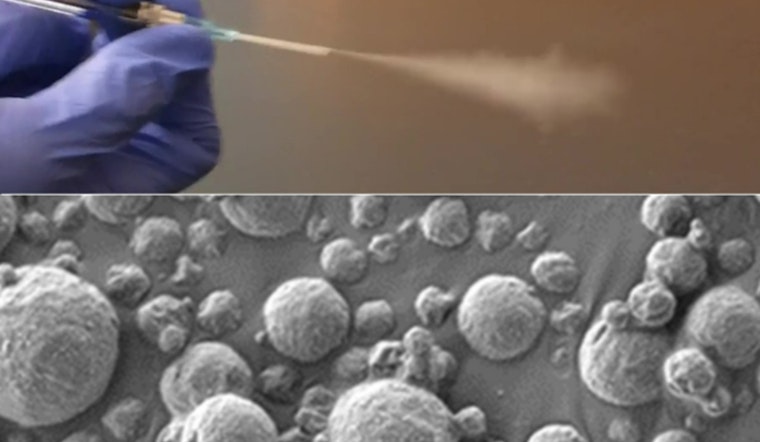
In a groundbreaking shift from the conventional low-dose computed tomography (CT), researchers at MIT have developed an innovative approach for early lung cancer detection through inhalable nanoparticle sensors, simply requiring a subsequent urine test for results. As reported by MIT News, these inhaled nanosensors, once interacting with cancer-related proteins in the lungs, release a detectable signal collected through urine, which can then be tested via a paper strip. This new method presents a potentially more accessible and less invasive option compared to CT scans, particularly benefiting regions with limited medical imaging resources.
Spearheaded by MIT’s Sangeeta Bhatia, the diagnostic tool could revolutionize cancer screening worldwide, especially in low- and middle-income countries. “Around the world, cancer is going to become more and more prevalent in low- and middle-income countries. The epidemiology of lung cancer globally is that it’s driven by pollution and smoking, so we know that those are settings where accessibility to this kind of technology could have a big impact,” said Bhatia in a statement obtained by MIT News. Despite needing to undergo annual scans, not everyone in the target demographic of heavy smokers over the age of 50 gets tested, while CT scans' high false-positive rate can lead to further stressful procedures.
These novel sensors, crafted by Bhatia and her team, leverage polymer nanoparticles coated with a DNA barcode activated by cancer-assisted protease enzymes, subsequently excreted into the urine. Prior versions targeting other cancer forms were intravenously administered, whereas, for lung cancer, an inhalable formulation has been successfully created. This new iteration circumvents the need for mass spectrometry in analysis, which is a boon for less equipped medical settings because the barcode detection now depends on a lateral flow assay—a simple paper test strip. “We were really pushing this assay to be point-of-care available in a low-resource setting, so the idea was to not do any sample processing, not do any amplification, just to be able to put the sample right on the paper and read it out in 20 minutes,” Bhatia noted in an interview with MIT News.
After successful animal testing that identified a precise combination of four sensors to detect early-stage tumors accurately, plans are underway to validate the efficacy of these panels against human cancers. While the technology is yet to undergo clinical trials in humans, a company called Sunbird Bio has already conducted phase 1 trials on a related sensor developed by Bhatia’s lab for liver cancer and nonalcoholic steatohepatitis (NASH) detection. These tests could offer a considerable improvement in lung cancer screening in parts of the world where access to CT scanning is scarce since they can be administered quickly and provide immediate results. According to an interview with Bhatia, “The idea would be you come in and then you get an answer about whether you need a follow-up test or not, and we could get patients who have early lesions into the system so that they could get curative surgery or lifesaving medicines,”
Funding for the research crossed diverse sources, including the Johnson & Johnson Lung Cancer Initiative, the Howard Hughes Medical Institute, the Koch Institute Support from the National Cancer Institute, and the National Institute of Environmental Health Sciences, which substantiates both its innovative approach and potential for far-reaching impact on cancer diagnosis strategies worldwide.





