

























































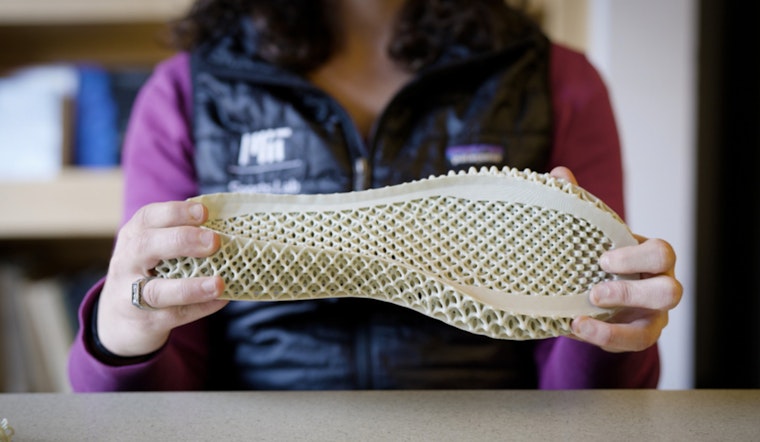
When pounding the pavement, the difference between a good run and a great one might just come down to the sneakers on your feet. In a study that could have sneakerheads and marathon runners alike racing to get a pair, MIT engineers have developed a model with the potential to revolutionize how running shoes are designed.
The newly introduced model aims to accurately predict how specific shoe properties will affect a runner's gait and performance. This tool could quickly become a go-to for designers who want to create innovative and high-performing sneakers. Using simplified gait dynamics, this model will simulate the interplay of a runner's physical characteristics and the varying stiffness and springiness of shoe midsoles. The goal is to ultimately minimize the energy a runner expends—something that varies widely from one athlete to the next.
As reported by MIT News, the current abilities of the model are more effective at discerning the effects of drastically different shoe types than of the subtler variations between most commercially available sneakers. However, the engineers envisage a future where this model is refined enough for consumers to use for personalized shoe selection based on an individual's unique running style.
"We've allowed for enough flexibility in the model that it can be used to design custom shoes and understand different individual behaviors," Sarah Fay, a postdoc in MIT's Sports Lab and the Institute for Data, Systems, and Society (IDSS), told MIT News. "Way down the road, we imagine that if you send us a video of yourself running, we could 3D print the shoe that’s right for you. That would be the moonshot."
MIT's breakthrough comes at a time when sneaker industry giants are beginning to utilize 3D printing in their shoe designs. This printing technique allows for a vast range of material properties and can create midsoles with specific local responses in terms of bounce and stiffness. According to Professor Anette "Peko" Hosoi, "With 3D printing, designers can tune everything about the material response locally." And when they approached the MIT team for guidance, the resulting model was an answer to the complex question of optimal shoe design.
Based on a study that recorded detailed measurements of runners' gaits, the team discovered that when their model optimized gait based on minimizing treadmill impact and leg energy expenditure, it created highly realistic gaits. This insight underpins their confidence in the model's ability to predict how a person will run even when the shoe is altered. As Fay explained, "If we tell our model, 'Optimize your gait on these two things,' it gives us really realistic-looking gaits that best match the data we have."
The full details of this research, which has been partly supported by sportswear titan adidas, were published in the Journal of Biomechanical Engineering. As the team continues refining the model, the hope is that one day it could be a part of every sneaker designer's toolkit, as well as a go-to resource for runners aiming to cross the finish line with energy to spare.





