

























































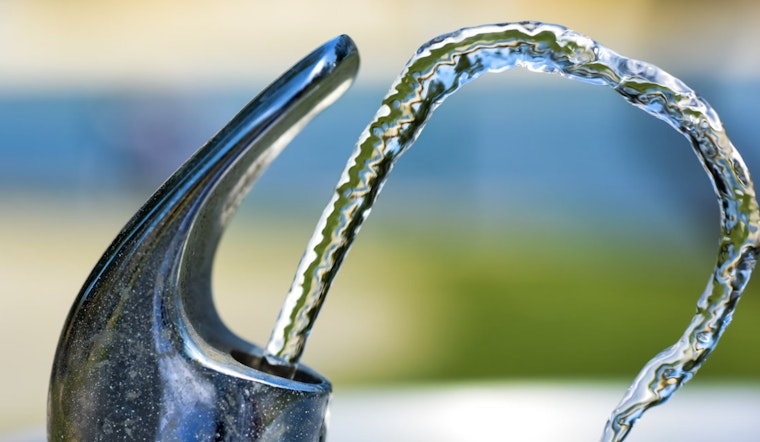
San Antonio Independent School District (SAISD) has found itself in a public health quandary as lead levels in the drinking water at several of its schools continue to soar above the Environmental Protection Agency’s (EPA) threshold, according to a recent report by KSAT Investigates. The environmental action group, Environment Texas, claims that the lead problem within the district is much graver than previously divulged. Following a voluntary lead testing program, it emerged that, 4% of 3,000 water samples collected surpassed the EPA’s action level at schools, some significantly so.
Comprehensive testing unearthed disturbing figures with one fountain at Highland Park Elementary reaching an alarming 685.7 parts per billion (ppb), and another at 277.2 ppb, far beyond the required action threshold of 15 ppb. Yet, in an email to parents, SAISD has suggested that COVID-related closures, leading to stagnant water, may have elevated lead levels but, the claim isn’t backed by data. Environment Texas Executive Director, Luke Metzger told KSAT, “We send our kids to school, you know, we expect them to be safe and to have clean water to drink and safe food to eat and to be protected.” Despite concerns, additional context from the EPA clarifies that the "action level" is indicative of the treatment efficacy against corrosion in water systems, not a definitive mark of water safety in homes.
The EPA is now proposing to lower the actionable limit of lead in drinking water from 15 µg/L to 10 µg/L, thereby increasing the number of SAISD fountains that would require urgent remediation. If this change materializes, fountains like the one at James Madison Elementary School, which tested at 14.5 ppb, would fall out of regulatory compliance, prompting the district to institute immediate corrective measures for an additional 21 drinking fountains, as per the new regulations.
Heightening the urgency is a unified stance among experts and advocacy groups that posit no level of lead exposure can be deemed safe, especially for vulnerable populations such as young children, whose developing bodies can suffer profound damage to the nervous system and brain from lead toxicity. Jerry Trevino, an environmental health administrator with San Antonio Metro Health, underscored the risk for young children, telling KSAT, "Their bodies are still growing and developing. Lead affects the nervous system and the brain." Echoing the concerns, the EPA’s website states, “There is no safe level of lead in drinking water” and emphasizes the grave health effects lead can have across all age groups, particularly infants and young children.
With 49 of its drinking fountains already over the EPA’s actionable limit, the SAISD must now grapple with the task of identifying and mitigating the lead sources to protect its students, an ordeal compounded by federal regulators demanding increasingly stringent controls over contaminants that flow through our children's drinking fountains.




