

























































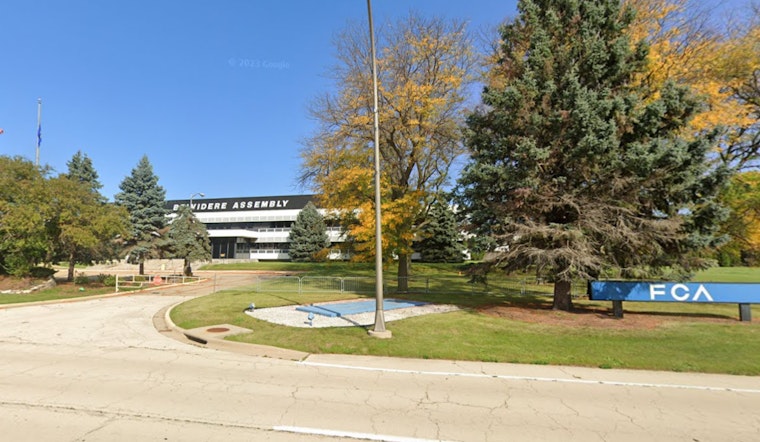
Stellantis, the automotive giant formed from Fiat Chrysler and Peugeot, has announced a significant pivot in its operational strategy, shelving its usual splash at the Chicago Auto Show and instead directing nearly $5 billion into revamping its Belvidere plant for future electric vehicle production. While fans of the automotive spectacle may miss Stellantis's Camp Jeep test track feature, the company's eyes are firmly set on electrifying its fleet.
The withdrawal from the 2024 Chicago Auto Show marks an end to a two-decade streak, with the Camp Jeep attraction often serving as a crowd-puller. This move has been attributed to the aftereffects of a prolonged union strike and consequent tightening of company purse strings. "To be as efficient as possible in our media spend, we are evaluating participation in auto shows on a case-by-case basis," a Stellantis spokesperson told the Chicago Tribune. Despite the absence, the industry stalwart is making a significant comeback at its Belvidere facility, which only last year appeared to be on the brink of closure.
The significant capital investment hints at a long-term strategy shift toward EV production, with nearly $3.2 billion earmarked for a new battery plant, $1.5 billion to repurpose the existing facility for electric midsize truck assembly, and an additional $100 million into a regional parts distribution hub. "Not only have we saved Belvidere, we’ve shown that these companies can reopen plants, if we unite and fight to force them to," the UAW rallied, according to Chicago Business.
While Stellantis's absence at the Auto Show might disappoint enthusiasts, the company's massive investment into the EV sector is poised to create thousands of jobs, rejuvenating an Illinois community that was once bracing for economic despair. Despite the earlier shelving of 1,350 workers at an idled Belvidere, the new focus brings the potential for Belvidere to host between 4,000 and 5,000 jobs in the near future, a throwback to its peak in 2019. Stellantis's commitment mirrors a growing trend in the automotive industry, as competitors like Ford and GM continue to flaunt their electric wares at the Chicago Auto Show.
The shift towards electric vehicle production is not just a local affair for Illinois but also a strategic maneuver for the company to stay relevant in the rapidly transforming automotive landscape. With Stellantis's significant investments and innovations, it will be interesting to see how the automaker will fare in a market increasingly concerned with sustainability and technology.





