

























































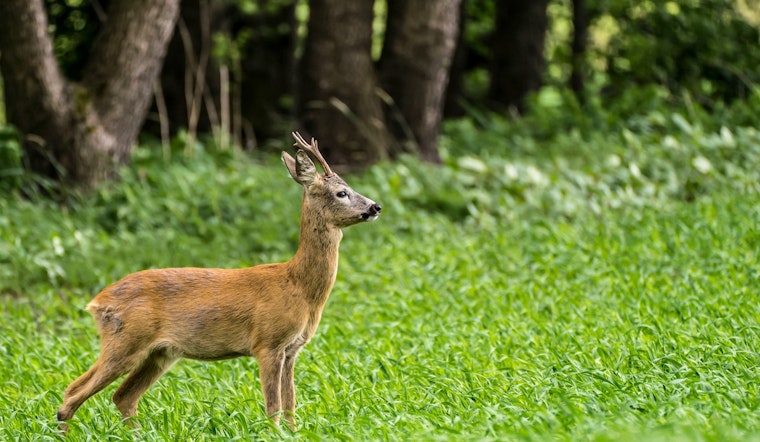
A fresh study at the University of Minnesota has thrown a bone into longstanding debates about how wolves influence deer movement around bait sites.
The study, conducted in the woodsy terrains of Michigan's Upper and Lower Peninsulas, reveals that the scent of wolves isn't the big bad factor in deterring deer from these baited locales, it's the twists and turns of the local habitat—wolves may be crafty, but it's the brush and bramble that's affecting Bambi's behavior, not the fear of furry predators, especially not in areas where the deer are as innocent to wolf threats as Little Red Riding Hood before grandma's house went to the dogs.
Researchers set their sights on the comparison between piles of deer bait doused with wolf urine and untouched control piles, utilizing remote cameras to document the deer's group size, alertness, and foot traffic. Published in the journal Ecology and Evolution, their findings highlight that, while evening activity took a nosedive in the wolf-scented sites of the wolf-wise Upper Peninsula, the deer's day-to-day life at the hunter's bait piles remained largely unchanged.
Ellen Candler, a sharp-eyed postdoctoral researcher at the College of Food, Agricultural, and Natural Resource Sciences, threw in, "Though we expected to see more vigilance, larger group size and fewer visits by deer in response to wolf urine-treated sites in the UP, we did not see any biologically significant difference between the treatments in the LP or the UP,” Candler told the publication, as cited in University of Minnesota report.
The research implies that thicker vegetative cover notches up deer wariness, potentially making them tougher to bag during hunting season, and nudges hunters towards choosing more open spaces in wolf country for an easier shot. So, while the shadow of the wolf may not send deer running for the hills as much as one might have assumed, selecting prime real estate for hunting in wolf-occupied zones might just be the better strategy; after all, a clear line of sight could turn a day in the woods from a wild goose chase into a walk in the park—metaphorically speaking, of course, for deer hunters.
This foray into the predator-prey dynamics at bait sites, an endeavor supported by the National Science Foundation, serves as a launchpad for further investigation into deer behavior sans baiting in states like Minnesota, where such practices are currently off the table. Who knows what future studies may uncover about these woodland chess games? For now, hunters might just need to rely on their wits—and perhaps a clearer view—rather than a vial of wolf urine, to tip the scales in their favor.




