

























































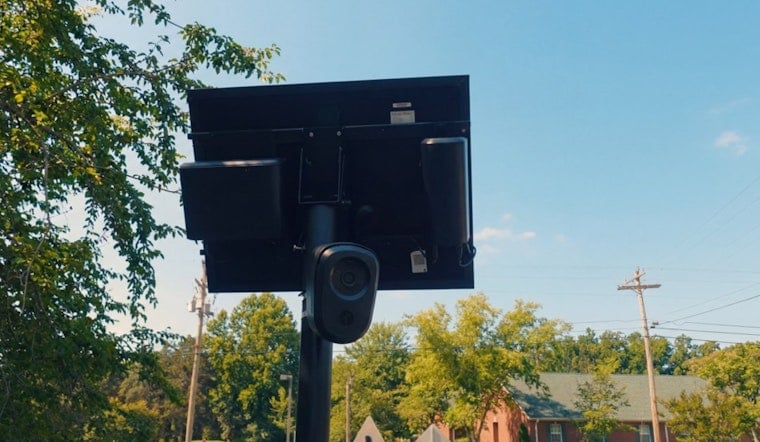
Sherburne County Sheriff's Office deputies began powering down and removing nine automated license plate reader cameras this week, ending a trial program that officials say was no longer worth the cost to public trust. Commander Ben Zawacki said the office discontinued its services agreement with vendor Flock Safety as of Wednesday morning, disabling camera search capabilities across the county.
The decision, first reported by KNSI, makes Sherburne County the latest Minnesota law enforcement agency to walk away from the license plate reader technology. Zawacki said the cameras can be a useful tool for public safety, but acknowledged there has been a growing backlash against how some agencies have used the data they collect. The sheriff's office said it did not want to erode community trust and valued its relationship with the people in the communities it serves, according to the station's report.
Sherburne County had operated nine of the cameras, including two in south St. Cloud, using grant money to fund the trial rather than tapping the county budget, per the same account. Continuing the program would have required committing taxpayer dollars going forward, Zawacki said. Neighboring law enforcement in the St. Cloud area has not followed suit — the St. Cloud Police Department, Sartell and Waite Park together operate more than 20 license plate readers between them, and it remains unclear whether those departments will scale back their own networks.
A Statewide Retreat From License Plate Surveillance
Sherburne County joins a lengthening list of Minnesota agencies stepping back from Flock's technology this summer. Duluth became the state's largest city to pull out of the program after six of its nine cameras were stolen or damaged, according to Police1. In June, the Columbia Heights City Council voted to cancel its contract and cover its cameras following months of resident protests, Mayor Amada Marquez Simula told FOX 9 Minneapolis.
Hoodline reported Isanti County dropped its trial too after vandals sawed down three of its eight cameras and the department determined it lacked the staff to process real-time alerts. That four-month test had recorded roughly 3 million vehicle passes and generated 35 arrest warrant notifications along major highway corridors before it ended.
Vandalism Takes a Financial and Physical Toll
Physical destruction of the hardware has become a defining feature of Minnesota's Flock backlash. All eight cameras operated by the Winona Police Department were stolen between July 29 and August 1 after vandals sawed off mounting poles at four highway locations, leaving the city with a $24,000 replacement bill, MPR News reported. Edina reported six damaged cameras, and at least seven Minnesota communities have reported vandalized cameras in recent weeks. Near St. Cloud, a camera pole was found cut off near the ground.
In Rice County, prosecutors charged a 42-year-old Faribault man in late July with felony interference with emergency communications and theft after he allegedly cut down a $3,000 Flock camera, covered its lens with black tape, and boasted to residents that it was tracking his movements, according to Bring Me The News. Investigators recovered the device from his garage after a local business worker reported his boasting.
Privacy Concerns and Federal Access Fuel Distrust
Flock cameras photograph passing vehicles and convert plate numbers into searchable text, also collecting vehicle make, model and color, though the company does not use facial recognition. Law enforcement agencies can search and share that data across jurisdictions, and critics have raised concerns that it can be reached for unauthorized tracking or immigration enforcement.
Those concerns gained specifics from a July investigation revealing that outside federal and state agencies, including entities partnering with U.S. Immigration and Customs Enforcement, executed hundreds of thousands of searches on license plate camera networks across eight Twin Cities suburbs between November 2025 and March 2026, according to Eagan Patch. Fridley's system alone logged more than 390,000 external queries in a single month, prompting several Twin Cities cities to restrict data access or sever ties with Flock Safety entirely.
Sherburne County had its own internal guardrails before ending the program. Under Policy 425, revised in October 2025, deputies were required to establish reasonable articulable suspicion and log a specific case number before running custom database searches, and the policy explicitly prohibited using the readers for immigration enforcement or personal tracking, according to the Sherburne County Sheriff's Office. Minnesota Statute § 13.824 separately requires that license plate reader data unconnected to an active criminal investigation be destroyed within 60 days and bars creation of a central state repository without legislative authorization, per the Minnesota Revisor's Office.
Flock Safety Responds With Mandatory Software Changes
The wave of contract cancellations arrives as Flock Safety itself moves to address the backlash. On Wednesday, the company announced mandatory changes to its nationwide software platform requiring all law enforcement customers to adopt audit tools that automatically lock out users who exhibit abnormal search behavior, according to Fast Company. Flock Safety CEO Garrett Langley said guardrails previously offered as optional features will become mandatory by January 1, 2027, as several officers nationwide face charges for improperly using the database for personal tracking.
Flock Safety operates more than 120,000 license plate reading cameras nationwide, but more than 50 law enforcement agencies and local jurisdictions have canceled, suspended, rejected or deactivated their arrangements with the company since the beginning of 2026, according to a tracker maintained by DeFlock. For Sherburne County residents, the immediate change means fewer eyes on the road — and an open question of whether St. Cloud-area departments will follow the sheriff's office in giving up the technology altogether.





