

























































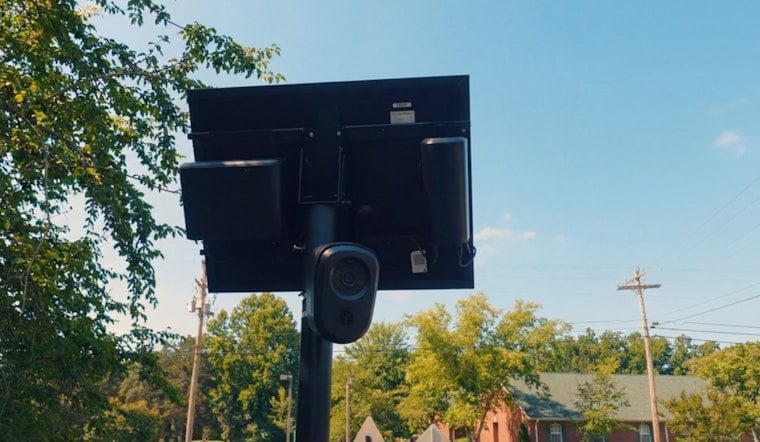
Isanti County Sheriff Wayne Seiberlich is ending a four-month test run of Flock license plate reader cameras, pulling all eight units from five entry points along the county's busiest highways after three of them were cut down by vandals and his office concluded it didn't have the staff to keep up with the technology's real-time alerts.
Seiberlich announced the decision in a Facebook post, saying the choice came down to budgetary needs and weighing whether the county truly needed the cameras versus simply wanting them, according to the Minnesota Star Tribune. He said the office lacked the staffing to use the data effectively and efficiently, and that many vehicles flagged by the cameras were located only rarely because of minimal staffing. Even so, the sheriff said the trial demonstrated that Flock technology can provide meaningful public safety benefits, and he left the door open to future investment in the system.
The Isanti County Sheriff's Office launched its no-cost Flock evaluation in April 2026, and the eight cameras recorded vehicles roughly 3 million times during the trial. In July alone, the system generated 35 notifications involving vehicle owners with active arrest warrants, helped identify four or five stolen vehicle plates, and provided information that proved critical during Amber and Silver Alerts, per the same Star Tribune reporting.
Three Cameras Sawed Down Before the Trial Ended
The decision to withdraw wasn't made in a vacuum. Three of Isanti County's eight cameras were cut down during the trial, mirroring a wave of anti-surveillance vandalism spreading across the state. In Winona, all eight Flock cameras run by the police department were sawed off at their base and stolen between July 29 and August 1, along with two Buffalo County cameras on the Mississippi River Bridge, a hit that left the city facing a $24,000 replacement bill, according to Bring Me The News. Edina has reported at least nine similar acts of vandalism, and broader reporting from MPR News documents cut poles, smashed power components, and spray-painted lenses hitting camera systems in Duluth, Faribault, Plymouth, and Minneapolis as well.
The vandalism has already produced at least one criminal case. In Faribault, 42-year-old Justin Lee Campbell was charged in Rice County District Court in late July with felony interference with emergency communications, theft, and property damage after allegedly bragging at a store about taking down an I-35 intersection Flock camera and keeping it taped in his garage — a case Hoodline detailed earlier this month.
Privacy Concerns Ran Alongside the Physical Attacks
Vandalism wasn't the only pressure the Isanti County Sheriff's Office faced during the trial. The department said it heard concerns from the public about government overreach through the collection and retention of license plate information, as well as feedback about potential privacy violations and worries over third-party access to Flock data. In response, the office says its review failed to identify any credible evidence that Flock improperly shared customer data, and it maintains that its cameras do not track a vehicle's movements beyond the initial point of contact, do not use facial recognition, and had shared no LPR information with federal agencies or agencies outside Minnesota. The office does have arrangements with other Minnesota agencies using the Flock system, meaning those in-state agencies have access to Isanti County's records, and it noted that Flock's own data is permanently deleted after 30 days.
Those assurances sit against a backdrop of statewide concern about how license plate data moves once it's collected. Minnesota Statute § 13.824 limits automated license plate reader collection to plate numbers, timestamps, and vehicle photos, bars agencies from building a central state repository without statutory authorization, and requires notifying the Bureau of Criminal Apprehension within 10 days of deploying stationary readers, according to the Minnesota Revisor's Office. Yet an audit released by the ACLU of Minnesota in March found that out-of-state and federal law enforcement agencies were executing nearly 300,000 monthly searches against local Minnesota ALPR databases, including queries tied to civil immigration enforcement. That finding helped spur Representative Brad Tabke's House File 3856, introduced in March, which would require judicial warrants to access plate databases and ban third-party data transfers.
A Pattern Playing Out Across Minnesota
Isanti County's retreat comes as other Minnesota communities wrestle with the same technology from different angles. In neighboring Anoka County, Sheriff Brad Wise signed a $174,999 one-year pilot contract with Flock Safety on June 30 to deploy up to 75 additional cameras and 10 drones — a figure priced $1 below the $175,000 threshold that would have required County Board approval, as Hoodline reported in its coverage of that contract. Days later, the Columbia Heights City Council voted to opt out of Anoka County's expanded network following public outcry over mass surveillance and data security.
The tension isn't confined to Minnesota, either. Flock Safety operates more than 120,000 license plate reading cameras nationwide, but at least 100 U.S. communities have rejected, canceled, or removed ALPR contracts amid privacy disputes and physical destruction of equipment as of this month, according to ABC News. University of Minnesota Law School Dean William McGeveran told MPR News that ALPR networks scan billions of license plates nationwide every month, warning that surveillance at that scale without judicial oversight creates significant exposure to law enforcement misuse and stalking.
For now, Seiberlich says the county is weighing whether to redirect the money it might have spent on Flock — cameras run about $3,000 each in the first year of a permanent leasing contract — toward jail improvements instead. He has not ruled out revisiting Flock technology down the road, but for the moment, Isanti County's five highway entry points are going dark.




