

























































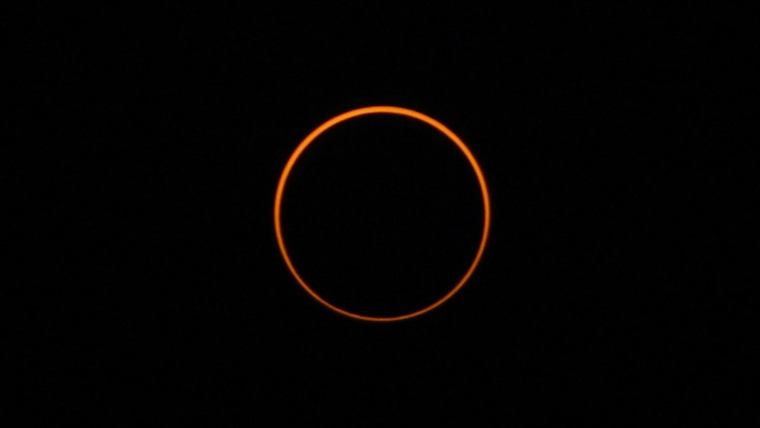
Get ready to experience daytime darkness like it's 2017 all over again. The clock is ticking down to April's total solar eclipse, a rare celestial ballet that's bound to have millions of eyes gazing skyward. Set to dazzle spectators across North America on April 8, this spectacle will cast a shadow straight from Mazatlán, Mexico, to Newfoundland, Canada, with a total eclipse path slicing through 15 states, including a tiny piece of Michigan. The Detroit News reports that viewers in southeast Michigan can expect the blackout to hit around 3:12-3:13 p.m. EST, lasting for a brief yet dramatic 3 minutes and 21 seconds.
As this grand sky show sweeps across the U.S., Michiganders outside the totality zone will still get a decent performance, with a 90% partial eclipse. And, according to woodtv.com, the Kalamazoo Valley Museum is stepping up, offering free solar eclipse glasses to the first 2,500 punters and setting up a viewing party complete with a NASA live feed for those who prefer to stay indoors. The museum will begin handing out the glasses starting March 1, emphasizing the importance of eye protection during the event. A sliver of Michigan, not wanting to miss out on the educational fun, will have their chance to learn more about the eclipse at a special series hosted by the museum, for a mere $3 admission.
Space buffs across the country are starting to plot their viewing spots, given that totality will linger for up to 4 minutes and 28 seconds - outdoing the previous solar blackout by a good two minutes. Places like Dallas, Little Rock, Cleveland, and Buffalo are set to be front and center for the eclipse, as per information from THE ASSOCIATED PRESS. Outside of the totality's path, a partial eclipse will still be visible almost continent-wide, with even Seattle and Portland catching a third of the action.
Eager beavers are already lining up special events along the totality's path. Towns are organizing festivals and museums, parks, and stadiums are beckoning with special gatherings. There's talk of weddings, space proms, and history lessons at Neil Armstrong's home turf, all in celebration of the eclipse—a star-studded social calendar that's orbiting around this one-off atmospheric anomaly. And if you're thinking ahead, don't hold your breath for an encore in the next year or two. The next total eclipse over U.S. soil won't be until 2044, so best to get your solar fix while you can.




