

























































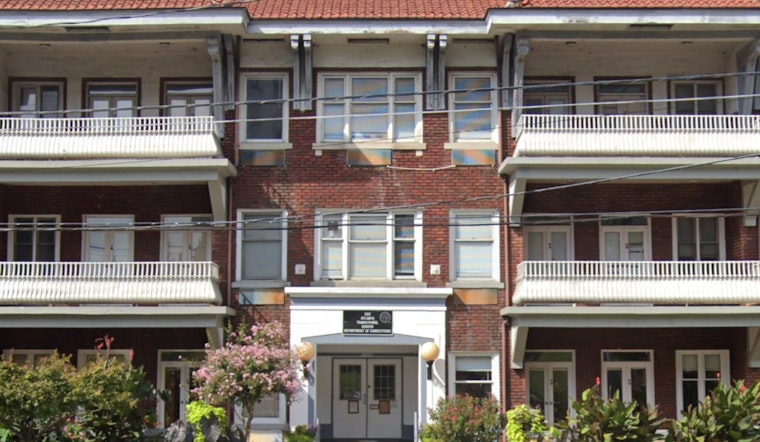
An inmate who never showed back up to an Atlanta halfway house last week was on the run was nabbed on Wednesday, US Marshals confirmed. The prisoner, Melvin Barkley, who was locked up for killing another man in a violent altercation, was supposed to be behind bars, not at a transitional center where he had been mistakenly placed. After going AWOL following a work shift, the U.S. Marshals Service captured Barkley in Hickory, North Carolina, as reported by 11Alive.
A statement from the Georgia Department of Corrections (GDC) acquired by 11Alive declared, "The can confirm the apprehension of Atlanta TC offender Melvin Barkley (GDC# 1000706575) today, February 7th at approximately 2:50pm in Franklin, North Carolina." The GDC Fugitive Task Force (SERTF) gathered the intel, leading to Barkley's arrest by the Carolina Regional Task Force, and his impending extradition back to Georgia. This capture follows a bureaucratic blunder that briefly allowed Barkley to partially taste freedom again, albeit under monitored conditions that he ultimately defied to temporarily disappear.
According to the FOX5 Atlanta report, his initial placement at the Atlanta Transitional Center was backed by a less serious theft conviction. Only later did the GDC catch their oversight when a more severe conviction for the voluntary manslaughter and aggravated assault surfaced. By then, Barkley should have been transferred back to the state prison system. The oversight highlights a snafu in the GDC's internal mechanisms—one that Barkley exploited until the law caught up to him again.
Barkley's criminal record, illuminated by the fatal incident involving Tyler Waters, sparked an outcry over the missteps that allowed him to be in the center initially. According to the events described by GDC, after a disagreement escalated to a deadly confrontation, Barkley pleaded guilty and received a sentence of 30 years without parole, concluded with 20 years of probation. However, a prior theft conviction had, inexplicably, granted him a place in the transitional facility—a mistake of the system, a system now intent to rigorously review to ensure such failures to do not occur again. "Should any failures be identified, we will ensure any individual(s) involved will be held accountable," said a spokesperson from the GDC to 11Alive.
The worrying lapse in protocol at the GDC has prompted an internal investigation, with the department vowing consequences for any policy breaches that might come to light. Barkley's ability to slip through the cracks serves as a stern reminder of the vigilance required in the management of inmate transitions. The Atlanta Transitional Center, tasked to bridge the gap between imprisonment and resumption of societal roles, became an unwitting participant in a scenario far removed from its rehabilitative mandate.



