

























































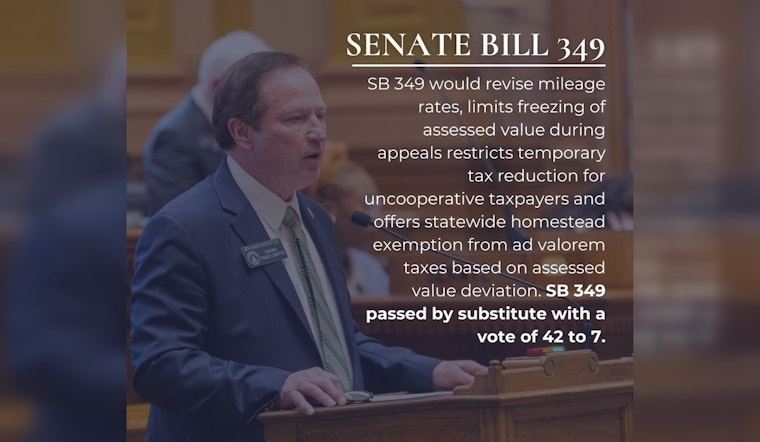
In a move to tackle the escalating property tax bills in Georgia, the state Senate has approved a bill that would cap annual increases in home values, as scheduled for tax purposes, to 3%.
The legislation, dubbed Senate Bill 349, passed with a vote of 42-7 last Thursday, aiming to remedy taxpayer grief over soaring tax bills, "It is to prevent people from being taxed out of their homes," Senate Finance Committee Chairman Chuck Hufstetler explained, detailing a scenario where family incomes stagnate while property taxes rise by significant margins, according to a FOX 5 Atlanta report. This planned limit would hold as long as a homestead exemption is retained by the owner which is in general for the duration of their homeownership, a measure enshrined in the confines of the legislative text.
The bill's passage does not ensure immediate implementation as voters must first give their nod of approval in a November referendum although the notion has already seen substantial support in the Senate it faces an uncertain future due to a different tax relief plan touted by House members, which earlier this month unanimously passed a bill hiking the state homestead tax exemption to $4,000 the measure differs in application and scale compared to its Senate counterpart leaving many to wonder which path will ultimately be taken. The House's proposal notably does not enforce a statewide valuation cap, favoring local governance over such decisions.
The competitive political landscape of property taxes has Georgia ensnared in a debate reflective of a wider national dialogue, with states such as Texas, Kansas, Colorado, and Pennsylvania, all wrestling with taxpayer dissatisfaction over increasing levies this topic has consistently seized electoral interest capturing the electorate's focus on fiscal restraint and localized decision-making, an attention to restraint further energized by current economic realities. "If they raise taxes now, they would have to do it through the front door, and not the back door," Hufstetler remarked, indicating a shift towards transparency in tax hikes, as stated by U.S. News.
Existing laws capping assessed values in some form are already active in numerous Georgia localities, but opposition from the Georgia School Board Association to the Senate's bill highlights the complexity of enacting state-wide fiscal policy local educators argue for greater autonomy, wary of the implications on school funding and teacher salaries in the face of inflation. Statistics spotlight a 41% bump in overall property tax collections from 2018 to 2022 in Georgia, a surge that complicates the narrative on household fiscal strain and governmental budgeting.





