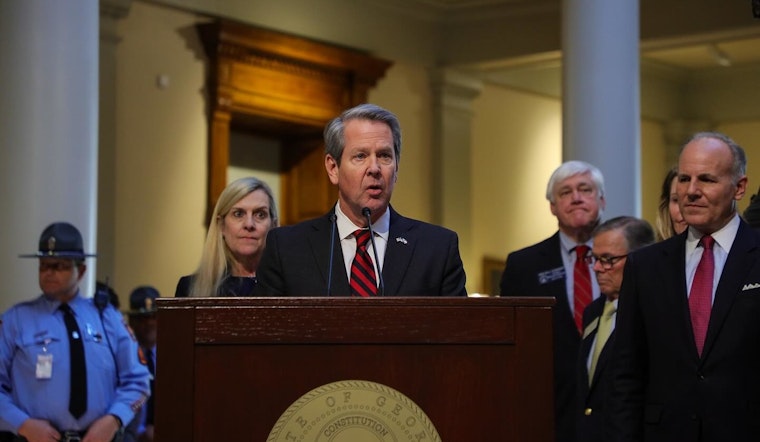
In an escalating legal battle over healthcare provisions, Georgia has taken action against the Biden administration to maintain its unique Medicaid program, which includes a work requirement for low-income residents. The state is fighting for the program to continue until 2028, despite a scheduled expiration at the end of September 2025. The lawsuit, lodged in U.S. District Court in Brunswick, challenges the federal decision to revoke components of the "Georgia Pathways" initiative, which the state claims has unlawfully shortened the program's duration, as Fox 5 Atlanta reported.
Georgia officials argue that the revocation of the work requirement by the Biden administration, blamed for causing delays in the program's rollout, has effectively reduced the initially approved five-year term. A ruling by a judge later deemed this revocation to be illegal. Georgia’s suit contends, "This case is about whether the federal government can benefit from its own unlawful conduct," seeking a mandatory extension of Pathways through September 30, 2028. Despite the ongoing litigation, a spokesperson for the U.S. Centers for Medicare and Medicaid Services declined to comment.
The CMS has twice denied Georgia's request for an extension, in October and again in December, citing a lack of proper public notice and a commenting period as reasons for the rejections. This was detailed in a December 22 letter from CMS Deputy Administrator and Director Daniel Tsai, according to insight from U.S. News & World Report. Governor Brian Kemp criticized the federal government for what he described as political interference with the state's "innovative plan."
The "Georgia Pathways" program, as noted by Fox 5 Atlanta, is designed to cover able-bodied adults earning up to the poverty line, which is $14,580 for an individual, or $24,860 for a family of three. To qualify, individuals must document 80 hours per month of work, study, rehabilitation, or volunteering. However enrollment has been sluggish, with less than 2,350 people signed up as of mid-December despite projections that Pathways could add 100,000 residents to the Medicaid rolls. The work requirement, set forth by the Trump administration, was later revoked by Biden's team in December 2021 which led to the initial lawsuit from Georgia officials.
Last year, a federal judge reinstated both the work requirement and a plan to charge some Medicaid recipients monthly premiums, which had also been rescinded, characterizing the revocation as arbitrary and capricious. Meanwhile, despite the state's legal pushback, and various delays, CMS's Tsai pointed out that different states often go through similar challenges with their healthcare initiatives. "Many states experience delayed implementation of their demonstration projects (or initiatives within a demonstration project) for various reasons," he stated, indicating that Georgia's situation was not an isolated occurrence.