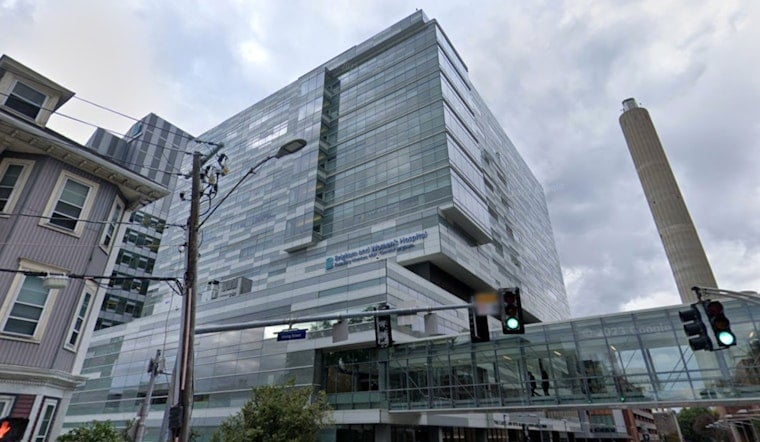
A prominent Harvard Medical School neuroscientist is under fire for alleged research misconduct involving a slew of scientific papers. Dr. Khalid Shah, known for his work in the neurosurgery department at Brigham and Women’s Hospital, is accused of data tampering and image plagiarism in 21 published articles, spanning over two decades.
In a concerning revelation, data manipulation expert Elisabeth M. Bik shared with The Crimson that Shah appears to have systematically falsified dates and to have lifted images from other sources, presenting these as original research. Bik's analysis alleges 44 instances of misconduct, with a particularly egregious example identified in a 2022 piece in Nature Communications, for which Shah was the corresponding author.
Bik's claims have already led to academic scrutiny, with Matthew S. Schrag, an assistant professor of neurology at Vanderbilt University Medical Center, and Mike Rossner, president of Image Data Integrity, confirming to The Crimson that the allegations warrant serious concern. Bik, through the use of AI software ImageTwin and reverse image searches, unearthed what she describes as duplicated and misrepresented imagery – a direct challenge to the integrity of Shah's published work.
Bik's detective work began after a former colleague of Shah tipped her off about potential misconduct. Dr. Shah has remained silent, offering no comments on the allegations. Mass General Brigham, the parent organization of Brigham and Women’s Hospital, abstained from discussing the specifics, but in a statement obtained by The Crimson, their chief academic officer Paul J. Anderson underscored their commitment "to preserving the highest standards of biomedical research."
The fallout of such allegations could potentially unravel years of scientific documentation. Of the publications hosting Shah's work, seven journals including Oncogene and PLOS One have confirmed they are looking into the matter. Echoing the sentiment of due diligence, Harvard Medical School's spokesperson, Ekaterina D. Pesheva, declared in an email that concerns of research misconduct will rightly trigger a formal inquiry, though maintaining the presumption of innocence until proven otherwise.
Nature Communications has yet to publicly comment on the issue. Based on past actions seen at Stanford and Dana-Farber Cancer Institute, when Elisabeth M. Bik blew the whistle, retractions and corrections followed in the wake of proven misconduct. The academic and medical communities now wait to see how this current investigation will unfold.