

























































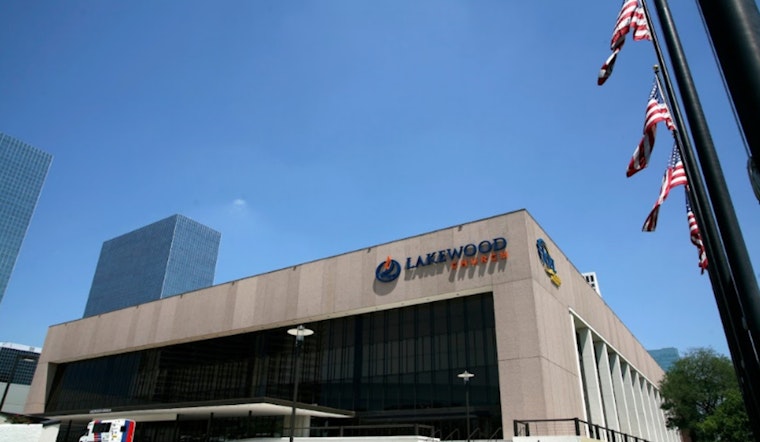
In the wake of the tragic shooting at Lakewood Church that left two injured, questions are surging about the future of security measures in places of worship. Lakewood Church is now considering the implementation of metal detectors in addition to its existing safety protocols, a spokesperson revealed in an announcement obtained by the Houston Chronicle.
While metal detectors could be a natural response to, increasing threats, Thom Bolsch, a former secret service agent, outlined to ABC7 the logistical challenges of securing a venue as large as Lakewood Church which spans over 600,000 square feet."It's very hard to protect that many people. The first thing you have to realize is: What is the security there for? Is the security really there to protect all 40,000 people who come into the building? Or is it there for the pastor and to protect him, his family, and the people up on the stage?" Bolsch asked.
The church already employs a dedicated security team and off-duty officers, yet as per the church's spokesperson Don Iloff's statement obtained by the Houston Chronicle, the alleged shooter with a backpack and two rifles entered the church through an accessible entrance, bypassing regular bag searches. This misstep has forced a reevaluation of security measures at the church and potentially, at other places of worship grappling with similar risks.
Some smaller congregations have opted to encourage members to volunteer for security, carrying concealed weapons during services. Bolsch however, advises that training is crucial for such volunteers to be effective and safe, as he discussed in an interview with ABC7. As institutions look to balance openness with security, the conversation continues about the best ways to safeguard the faithful, in a time where houses of prayer are facing increased safety threats.
Amidst the complex debate on enhancing security, Mayor John Whitmire has stated that there will be a citywide increase in security at places of worship. This decision underscores the continuing concern for the safety of spiritual spaces across Houston fueled, by recent violence. Institutions like the Islamic Society of Greater Houston and the Jewish Federation of Greater Houston already have employed armed guards, and some have received sizable grants from the Federal Emergency Management Agency for security upgrades, details which Renée Wizig-Barrios of the Jewish Federation related to the Houston Chronicle





