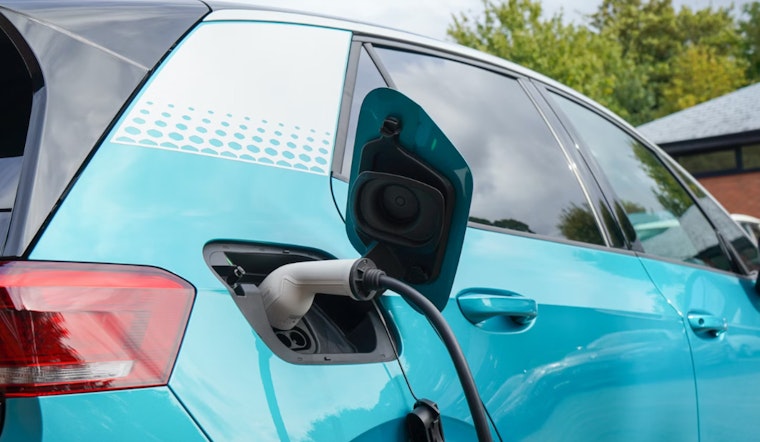
The Healey-Driscoll administration is pumping $50 million of federal funds into boosting electric vehicle (EV) infrastructure across the Bay State, targeting the increase of charging stations and electrifying the state fleet, according to an announcement on the Massachusetts government website.
With these funds sourced from the American Rescue Plan Act (ARPA), Massachusetts aims to tackle climate change by reducing emissions from transportation, which is especially significant for state and rideshare vehicles. Spending a lot of time on the road, Uber and Lyft drivers are eyed by this new initiative as a potent force for emissions reduction. "By investing in the electrification of these vehicles, we can have a much more cost-effective impact on emissions," Governor Maura Healey said in a statement obtained by Massachusetts government website.
Breaking down barriers to EV adoption has been tagged as a priority by the administration, with Lieutenant Governor Kim Driscoll pointing out that many in Massachusetts are eager to switch to electric vehicles but are held off by concerns over charging access. "This investment will break down barriers to widespread electric vehicle adoption and help Massachusetts meet its ambitious greenhouse gas emissions targets," she told mass.gov.
This move also promises to bring more equitable access to clean transportation, particularly in environmental justice communities which bear the brunt of pollution from vehicle emissions. "Vehicle emissions not only contribute significantly to climate change, but also impact public health, especially in environmental justice communities," Secretary for Energy and Environmental Affairs Rebecca Tepper said, according to mass.gov, stressing the importance of distributing clean transit options evenly.
The state's ambitious plan covers a swath of EV advancements: streetlamp chargers to serve multi-unit dwellings, mobile chargers for heavy vehicles that can dodge grid infrastructure limits, and cutting-edge vehicle-to-everything tech that could turn EVs into mobile power sources. MassCEC CEO Dr. Emily Reichert emphasized that these ARPA funds are set to "directly impact our work", according to mass.gov. Reichert's razor focus on extending curbside chargers and electrifying the rideshare fleet is aimed squarely at making EVs accessible and affordable for all.
To anchor these initiatives at the grassroots, existing structures like pole-mounted chargers will be utilized and expanded, targeting the residents who lack easy access to home charging. At the state level, a fleet of EV charging infrastructures at 60 or more priority sites is planned to sprout. Meanwhile, the Division of Standards takes on the task of making sure these installations perform up to par with testing equipment and trained personnel.
With the long-term analysis of EV charging needs funded until 2026, Massachusetts is steering towards a well-charted future in EV infrastructure, equipped to support an anticipated 10,000 fast charging ports by 2030. As they first wheel into motion, both the Senate and the House Chairs of the Joint Committee on Telecommunications, Utilities, and Energy, State Senator Mike Barrett and State Representative Jeffrey N. Roy acknowledge the efforts to face head-on the 'huge issues' like convenience and charger maintenance, as per statements on mass.gov.