

























































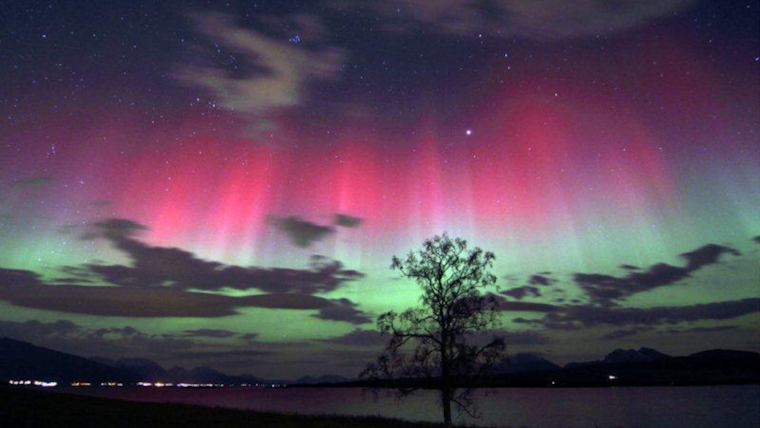
Michigan residents and stargazers across the Northern U.S. are eagerly anticipating what might be a dazzling display of the Aurora Borealis this week thanks to recent solar activities. The National Oceanic and Atmospheric Administration (NOAA) has noted several coronal mass ejections that have blasted from the sun, setting the stage for potential geomagnetic storms between Feb. 13 - Feb. 15, with Wednesday expected to be the most active evening, as reported by FOX 2 Detroit.
While eager watchers are ready to grab their coats and cameras, the forecast holds another card to play. The National Weather Service suggests a plethora of clouds that could obstruct the view in Southeast Michigan, leaving some to consider a journey northward to catch the iconic greens and blues of this natural phenomenon. The USA Today further details the visibility prospects, extending hopes to a swath of states from Maine to Idaho.
The intensity of this celestial event has been gauged as a G2 on NOAA's space weather scale, signaling a moderate storm that could set off voltage alarms for high-latitude power systems. Still, it shouldn't cause alarm to the general public. The fantastical lights, a result of solar particles crashing into Earth's magnetic field, have fascinated onlookers for centuries and have recently been a source of aspiration for Michigan's night sky enthusiasts. According to Awesome Mitten, the state's Upper Peninsula offers some of the most majestic vantage points, with sprawling shorelines along Lake Superior's serene waters serving as an idyllic backdrop.
While the celestial dance of the Aurora Borealis promises to draw eyes heavenward, would-be watchers must still reckon with terrestrial concerns—namely clouds and light pollution. Timing is also crucial; the hours from dusk to dawn are prime viewing time if conditions permit, and escaping the city’s glare increases the chances of witnessing the elusive lights. For those equipped with a camera or smartphone, these devices may capture what the eye misses, as suggested by USA Today. Moreover, applications like Space Weather Live can help enthusiasts to optimally time their gaze skyward, per Awesome Mitten.
No photograph or video can match the awe-inspiring experience of watching the auroras unfurl across a canvas of stars. While this week's display is an immediate prospect, NOAA anticipates more such events shortly as we head toward the peak of Solar Cycle 25. Those who miss out this time, fear not—the sun will keep churning plasma, and the Northern Lights will continue to grace our skies, as every clear night post-solar storm holds the potential for another light show. For more detailed and up-to-the-minute forecasts, enthusiasts can check the Space Weather Prediction Center's 30-minute aurora forecast online.




