

























































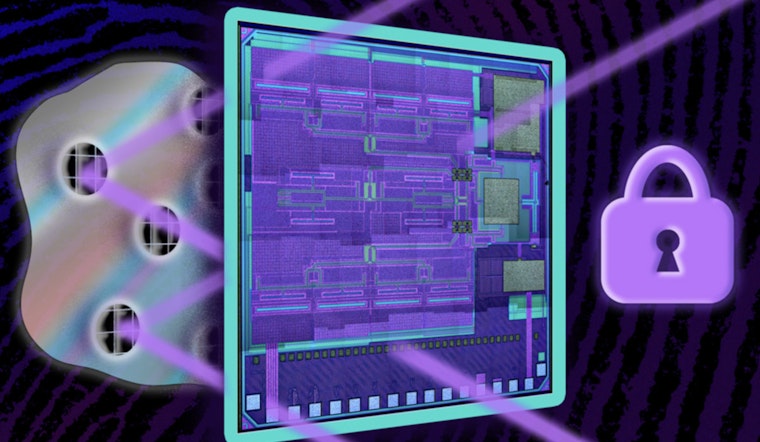
MIT researchers are rolling out a new cryptographic ID tag that's out to revolutionize product authentication. These tags are touted to be tinier, cheaper, and way more secure than their RFID counterparts, the kind that currently adorn everything from luxury goods to warehouse inventory to ensure they're the real deal. In a significant improvement over the previoustechnological standards, these tags bank on terahertz waves to perform their magic – the same kind of waves that make your airport body scanner work.
The Achilles' heel of classic RFIDs was their vulnerability to being peeled off and illegally transferred onto counterfeit items. But as MIT experts have cleverly devised, to truly combat this illicit act, they've come up with an antitampering tag that is almost impossible to duplicate, let alone transfer. By mixing metallic particles into the tag's adhesive, a unique, unreplicable pattern is created on the item's surface. This achievement has been highlighted on the MIT news website, hinting at a new era in scrambling to make goods tamper-proof. "These metal particles are essentially like mirrors for terahertz waves. If I spread a bunch of mirror pieces onto a surface and then shine light on that, depending on the orientation, size, and location of those mirrors, I would get a different reflected pattern," associate professor in EECS Ruonan Han, who leads the Terahertz Integrated Electronics Group at MIT, told MIT News.
The nifty tech behind these tags doesn't just stop at their security features. A mere 4 square millimeters in size, they're opening doors to safeguarding items that were previously too small to be securely tagged, including tiny yet critical medical devices. The research, a collective effort spanning several disciplines at MIT, will be showcased at the IEEE Solid State Circuits Conference, bringing together the minds of EECS graduate students and professors alike.
But what's innovation without a hiccup or two? When it came time to test these tags, researchers stumbled upon a challenge – it was a Herculean task to manually verify if two patterns matched. Undeterred, they pivoted to harness artificial intelligence. An adept machine-learning model, trained to to accurately compare these patterns was born, boasting a jaw-dropping accuracy rate above 99 percent. "One drawback is that we had a limited data sample for this demonstration, but we could improve the neural network in the future if a large number of these tags were deployed in a supply chain, giving us a lot more data samples," EECS graduate student Eunseok Lee explained to MIT News.
While the technology seems bulletproof, it's not without limitations. Terahertz waves lose gusto during transmission, so the sensor needs to get up close and personal – within about 4 centimeters of the tag – for a faithful reading. This proximity requirement fits the bill for checkout counters and barcode scans but would crash and burn in situations like automated highway toll collection. MIT researchers are already on the case, eager to extend the reach of terahertz waves and further solidify their position in the world of authentication and security. As Han optimistically pointed out, "One thing we really want to show here is that the application of the terahertz spectrum can go well beyond broadband wireless. In this case, you can use terahertz for ID, security, and authentication. There are a lot of possibilities out there."





