

























































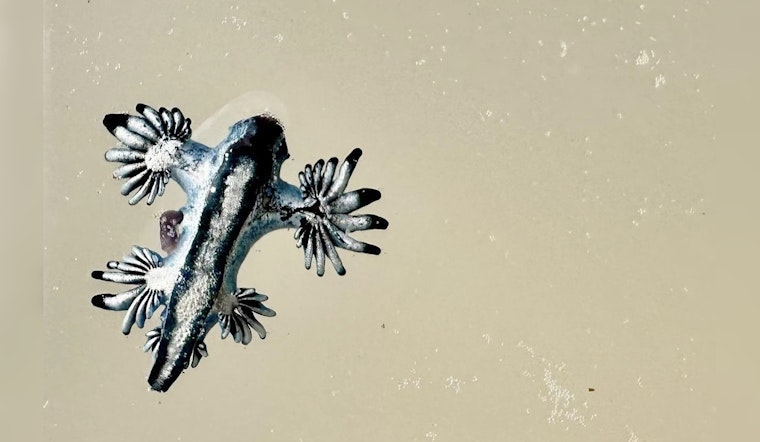
There's a unique and stunning creature making its way to the shorelines, but it's best admired from a distance. Known as the blue dragon, or Glaucus atlanticus, this sea slug has been reported on the beaches, notably at North Padre Island over the weekend, a sight to behold but also a venomous hazard if touched, marine experts caution.
An advisory comes from the Harte Research Institute for Gulf of Mexico Studies, which issued a statement on Facebook, warning that these creatures can unleash a sting more potent than their prey, the Portuguese man of war. "When threatened or touched, it can release stinging cells with more powerful stings than the Portuguese man of war can alone." The institute emphasizes that beachgoers should avoid handling the creatures and instead should capture their beauty in photographs, as these sea slugs have been washed ashore by strong southeast winds, a phenomenon increasing as spring approaches, the Houston Chronicle reports.
Not typically seen on Texas beaches, the blue dragon is a pelagic nudibranch, floating on the ocean surface and feeding on the toxins from creatures like the Portuguese man o' war, with its extensive tentacles. Remarkably, the blue dragon is immune to these toxins and stores them for its defense within sacs in its finger-like appendages, making their sting a surprise package for unsuspecting humans or predators, according to a statement on Harte Research Institute's Facebook page.
These sea slugs are not only a beautiful anomaly but they are also indicators of changing oceanic conditions, which may include cyclical changes in the populations of their prey, increasing ocean temperatures and intensified storm activity, possibly leading to their appearance in non-traditional areas; however, it should be noted by would-be beach explorers, even after a blue dragon's death, venom inside their tiny bodies remains active posing risks if stumbled upon, as per the Houston Chronicle.
The Harte Research Institute's clear message is to exercise caution, keep your hands to yourself, and simply enjoy the view of these rare sea wanderers with your eyes or camera lens.





