

























































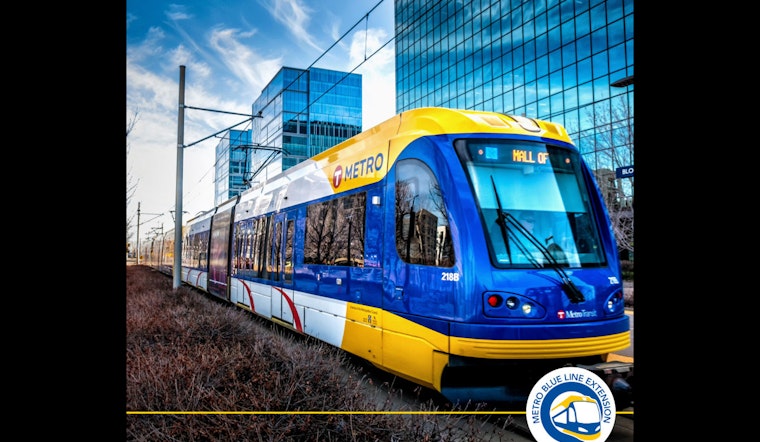
The Metropolitan Council's anticipated METRO Blue Line Extension is shaping up to be a frontrunner for securing federal funding. The expansion, set to stretch the current Blue Line light rail by 13.4 miles, aims to tether North Minneapolis, Robbinsdale, Crystal, and Brooklyn Park closer to the Twin Cities public transit web.
Ridership numbers are already promising, pegging daily usage at a potential increase of 11,500 to 13,000. This boost could elevate overall Blue Line daily ridership beyond the 30,000 mark. According to Met Council Member Reva Chamblis, "Providing efficient, reliable, all-day transit service will add mobility that doesn’t exist today for many residents along the Blue Line Extension corridor," as per a statement obtained by Metro Council. The expectation is that up to half of these additional riders will hail from communities without access to a personal vehicle, solidifying the extension as a vital lifeline for many.
Even amidst post-pandemic recovery, the Twin Cities have seen a 16% upswing in transit usage, while light rail figures specifically have spiked by 19%. Forecasting suggests that such numbers will continue on the up, especially as the STOPS model – a federal forecasting tool – merges contemporary data with that of 2019, adopting a more cautious approach. The resulting ridership estimate, according to a Metro Council publication, is grounded in a reality where local light rail projects have historically surpassed initial expectations by 20 to 30 percent.
Financially, the extension's construction is clocked at roughly $2.2 billion, with contingencies inflating the probable total to between $2.9 and $3.2 billion. Hennepin County Commissioner Jeff Lunde comments on the project's financial scope, acknowledging that "Light rail projects are 100-year investments. They aren’t cheap, but they are worth it." These preliminary cost figures are alleged to fall within what's currently typical nationwide post the fiscal aftermath of the pandemic, standing on the more cost-effective end of the spectrum for such infrastructure endeavors.
This venture into expanded rail capacity is more than a simple infrastructure update; it's a nod towards addressing long-standing disparities, as Hennepin County Commissioner Irene Fernando highlights the project's significance for "communities of color that have historically been underinvested in." The Blue Line Extension isn't only transporting people but also aspirations, aiming to balance social inequities through improved access and opportunity. Metropolitan Council Member Anjuli Cameron champions the cause: "This investment supports regional equity," signaling a future rich with potential for those residing within reach of the proposed line.
With multiple reviews and updates on the horizon, the Blue Line Extension strides into a future scrutinized by its community and supported by peer and federal reviews. Public meetings are anticipated to ensure the corridor’s citizens can pitch in with feedback, ensuring that the tracks to be laid down are not mere ribbons of steel and asphalt, but pathways to equitable growth and connectivity.





