

























































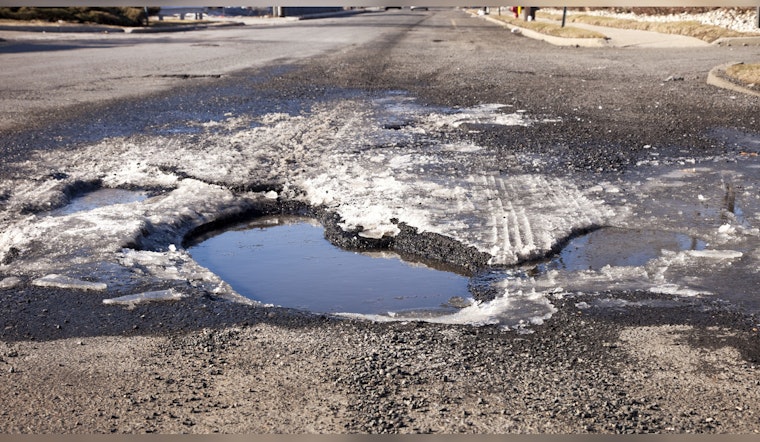
The roads in Massachusetts' distressed communities are not just bad, they cost drivers more at the pump, a recent study by the University of Massachusetts Amherst has found. According to the research, which was highlighted in a UMass Amherst news article, residents in these lower-income, high-minority, or limited English proficiency areas are facing a road quality crisis that hits their wallets through increased fuel consumption.
Assistant professor Jessica Boakye, and one of the study's authors, explained the concept of 'environmental justice communities,' saying, "If you’re in an environmental justice community, you’re dealing with climate change, you might be housing insecure, you might have a worse car, and then your infrastructure isn’t working—and so all of these risks stack up against you and make it hard for you to move up in society and to get out of your current situation." The MassDOT defines these communities based on their economic disadvantages, and the study indicates they are unfairly burdened by the state's infrastructure decisions.
The disparity is startling, with 21% of environmental justice, or EJ, communities suffering from poor roads as opposed to just 10% of non-EJ communities, UMass Amherst's news article detailed. On the other end of the spectrum, 37% of the better-off, non-EJ neighborhoods boast excellent roads, compared to a mere 21% in EJ areas. This infrastructure inequality not only affects the quality of life but also translates to higher fuel expenses for those who can least afford it.
Egemen Okte, lead author of the study and faculty member of the UMass Transportation Center, raised questions about the wider impacts of the poor road maintenance decisions. "What would be the impact of the agency choosing to maintain or not maintain a road, on the people who live around those roads?" The study's conclusion: a penalizing effect on EJ communities. It showed that nearly all drivers in the state spend more on gas due to subpar road conditions, with most seeing a 5 to 7% increase in fuel usage. However, the real pinch is felt in EJ communities where 16% of drivers experience a steep jump, using over 7% excess gas – that's double the rate faced by drivers from more privileged areas.
With an analytical lens, the study also estimated the real-world cost of these disparities. For example, a typical commute from Gloucester to Haverhill in an EJ community vehicle, demands 6.1% more fuel, a statistic that shines a spotlight on not only the financial strain but also the additional emissions burdening these neighborhoods. Driving 25 miles per hour and with gas at $3 a gallon, such inefficiencies add up to an extra $130 each year, Jessica Boakye told UMass Amherst news. "We only looked at one impact," Boakye stated, indicating that the scope for identifying and addressing inequalities in infrastructure and its ripple effects across communities is vast.
Both Okte and Boakye stress the need for incorporating social factors into engineering and policy decisions to begin remedying the issues faced by EJ communities. While the study initiates the conversation, it highlights the bigger problem at hand as Okte implies, that systemic change is required for such problems, which have remained invisible for too long, to finally be brought into focus and addressed adequately.





