

























































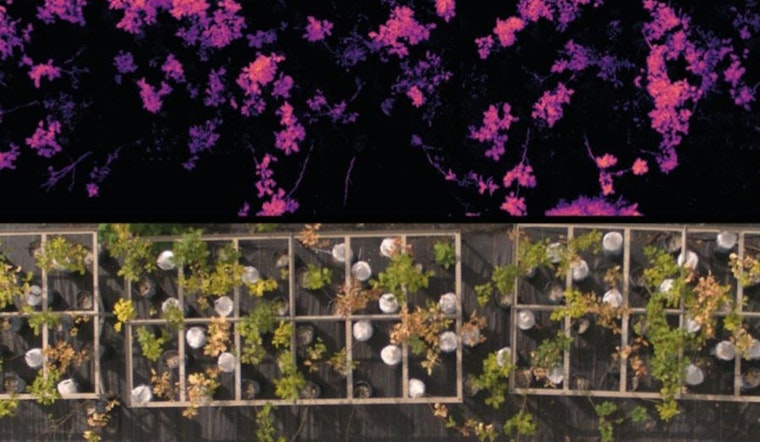
Researchers at the University of Minnesota have hit a scientific milestone, developing a cutting-edge method to distinguish between the effects of drought and the devastating tree disease, oak wilt. The health of North America's oak forests, which perform critical ecological functions, has been under siege by these two threats, and until now, differentiating them has been a major challenge.
The breakthrough came in the form of an innovative detection system, which uses remote sensing tools paired with physiological measurements to spot signs of oak wilt—and does so early on. As reported by the University's news release, "spectral ecophysiology," the technique at the heart of this approach, marries biological understanding with high-efficiency landscape measurement in a novel way, to allow for this early detection. This not only promises to protect forests but also to pioneer more effective monitoring of plant stress.
This research, recently published in the Proceedings of the National Academy of Sciences, relies on analyzing light reflected from canopies and can spot tell-tale indicators like dips in photosynthesis efficiency and leaf rehydration capacity. Moreover, these symptoms can be picked up to two weeks before they are visually noticeable. "Forest health specialists often comment on how difficult it is to distinguish between oaks dying from two-lined chestnut borer and, drought impact versus oak wilt in the same forest stands," Jennifer Juzwik, an adjunct associate professor at the University of Minnesota, told the university's news hub. "This research demonstrates the potential to detect and differentiate between these two critical oak problems."
"These models are like superhuman eyes — they see light at wavelengths far beyond what we can see. Once trained, they can use the information hidden to our eyes to translate light into physiology," Gerard Sapes, a biological scientist at the University of Florida and former postdoctoral researcher at the University of Minnesota, explained in the university's publication.
The use of this advanced technological approach offers a glimmer of hope for the long-term conservation and management of oak forests. But the research team isn't resting on their laurels; future research endeavors aim to apply spectral ecophysiology to broader ecological scenarios. Jeannine Cavender-Bares, director of the ASCEND Biology Integration Institute and professor at the University of Minnesota, spoke of the method's uncanny ability to foretell the onset of both oak disease and drought, acknowledging the precise forecasting it furnishes to the field of forest management.
In an era where the health of native ecosystems is hanging in the balance, the research conducted by the University of Minnesota’s faculty and the support of institutions like the NSF ASCEND Biology Integration Institute, NASA Biodiversity program, and MITPPC resonates as a beacon of innovation and collaboration. Such scientific advancements serve as the cornerstones in the increasingly vital fight to shield our natural heritage from the rising tide of environmental threats.





