

























































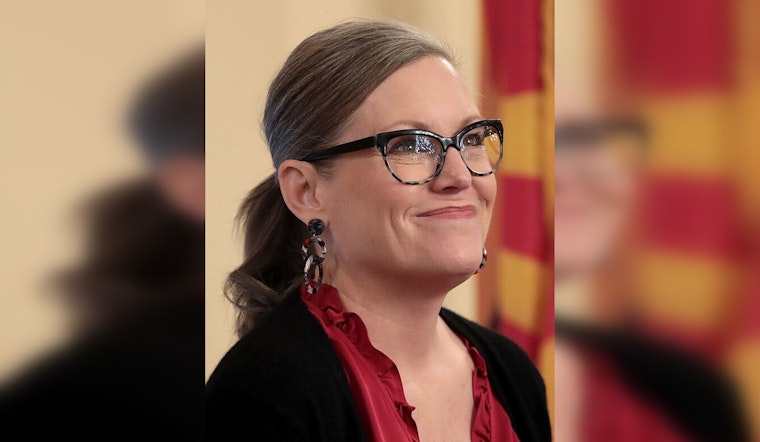
In a recent push to safeguard Arizona's communities, Governor Katie Hobbs has made a direct appeal to federal lawmakers for an influx of funds to manage the snowballing border crisis. Through a letter addressed to several heavy hitters in the Senate and House Appropriations Committees, Hobbs explicitly requested no less than $752 million to bolster the U.S. Customs and Border Protection's capacity and to sustain the Shelter and Services Program. This call for financial reinforcement is aimed to materialize in the forthcoming 2024 Homeland Security Appropriations bill, as detailed in a story by ABC15.
Arizona, according to the governor, extends beyond a mere backdrop for political theatre—it is a domain where real lives unfold and futures are built. "Arizona's border is more than a convenient location for politicians to take photo ops and stage press conferences... It’s where my constituents live, work, and raise their families," Hobbs remarked in her correspondence. The urgency of the situation is underscored by Arizona's exhaustive efforts to ensure regional security, efforts which now demand congressional reinforcement. Notably, organizations like Pima County Catholic Community Services, pivotal in providing migrant assistance, are inching toward a financial cliff, expecting to deplete their resources by April, as revealed by ABC15.
The governor's stance has found resonance with Arizona Senators Mark Kelly and Kyrsten Sinema, who had earlier penned a similar letter to Congressional appropriation committees. Their fear is that, absent federal intervention, the inevitable plight of migrants would culminate in their unsupported release onto the streets of Arizonian cities, a situation the senators described in a Feb. 27 communication to lawmakers.
In tandem with the fiscal appeal, Hobbs is promoting the resurrection and eventual passage of nonpartisan border legislation, strategies that have languished despite historical migrant arrivals at the southern frontier. This sentiment was echoed by Yuma Police Chief Thomas Garrity, who, in an interview with FOX News, expressed hope for Washington's attentiveness: "I hope that Washington just listens to what we here on the border need. Sometimes we're forgotten. You hear about San Diego, you hear about Tucson, you hear about Eagle Pass, but they forget about that here in Yuma. We face this every day." Hobbs' communication has thus reverberated from the local spheres to the national stage, where the efficacy of congressional action—or the lack thereof—remains to be seen.





