

























































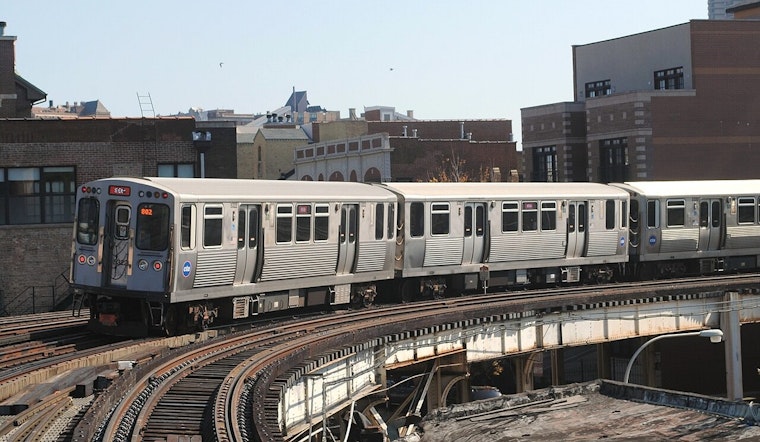
Big bucks are rolling down the tracks towards Chicago's Far South Side. The Biden-Harris administration has tucked a hefty chunk of change into their Fiscal Year 2025 budget request for a major city project. Among 14 transit initiatives nationwide, the Chicago Transit Authority's (CTA) Red Line Extension (RLE) project is slated to snag $350 million in federal funding support, should Congress give the nod.
Lengthening the Red Line by 5.6 miles, this transit overhaul targets areas of Chicago that have long languished in the shadow of progress. With an overall cost of $3.6 billion, the CTA has in its corner not only the current presidential administration but also a financial plan touting a mix of federal, state, and local support. "The CTA greatly appreciates the support from our federal partners who continuously push for the largest project in agency history to get off the ground," said CTA President Dorval R. Carter, Jr., in a statement obtained by CTA.
This significant infusion, part of a broader "New Starts" federal fund, adds to the already earmarked $1.973 billion for the RLE. The CTA is concurrently wading through the project's "Engineering" phase, refining designs and securing the nuts and bolts needed for eventual construction, with an eye on a Full Funding Grant Agreement by year's end.
Aside from federal funds racking up to nearly $2 billion including the proposed sum, local Transit TIF dollars will chip in $950 million, while another $130 million will come flowing from air quality and carbon reduction programs. With state funding anticipated at $365 million, the fiscal puzzle nears completion as the CTA aims to scrape together the rest through bonds and miscellaneous sources.
But what exactly are Chicagoans getting for this large tab? Talking future stations at 103rd Street, 111th Street, Michigan Avenue, and near 130th Street the Red Line Extension promises to shave up to half an hour off commutes downtown for those perched at the city's edges. The project pledges not just swifter journeys but economic ignition for the Far South Side, stirring hope in the hearts of residents and businesses that have hitherto bided their time for such a boon.
While tracks are laid and stations rise, the RLE project also aims to be a job creation engine, with Carter estimating over 25,000 new roles cropping up in Cook County because of the extension. From workforce training to a leg up for small, disadvantaged businesses, the RLE isn't just about getting from A to B – it's charting a course for community growth and opportunity. Preliminary project glimpses and more info can be caught at transitchicago.com/rle.





