

























































Amid a pivotal moment for public safety in the nation's capital, a report by the Office of the District of Columbia Auditor (ODCA) has delivered a stark verdict: District agencies are failing to efficiently tackle crime. The audit, released yesterday, highlights significant performance gaps just as the D.C. Council prepares to vote on crime legislation.
The report, as noted by FOX 5 DC, paints a grim picture of a disjointed crime-prevention ecosystem, with several agencies not "performing as they should to have maximum impact on crime reduction." The audit specifically calls out the Department of Forensic Sciences (DFS), which has been without accreditation, crucial for analyzing key evidence types such as DNA and firearms.
Compounding the issues at DFS, the agency has also not met its staffing goals for civilian forensic scientists within the Crime Scene Sciences Division (CSSD), forcing sworn officers of the Metropolitan Police Department (MPD) to fill in. This has indirectly impacted their availability to perform essential patrol and investigative duties, as detailed in a summary by DC News Now.
Moreover, according to WTOP, there's ambiguity over the effectiveness of violence prevention programs like the Pathways Program. Kathy Patterson, the DC Auditor, stated, "The District is not collecting data on recidivism. It’s not collecting data on employment. So folks are being given services, but we don’t know the impact." These accountability oversights come to light as the NEAR Act's recommended Community Policing Working Group is eyed as a potential conduit to bridge the divides between law enforcement and communities.
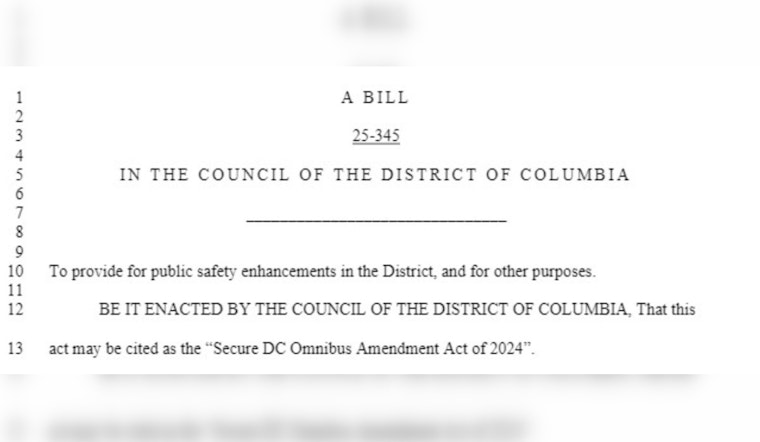
This wave of reports and audits feeds into a crucial narrative as the Secure D.C. Omnibus Amendment Act of 2024 awaits its fate in council chambers. The legislation's vote, imminent and could potentially redefine the District's crime reduction strategies, hinges on insights gleaned from meticulous, yet troubling, evaluations of the city's crime-fighting establishments.





